Zoya Cherkassky
Výstava 7 October 2023 se záměrně otevírá 7. října 2026, v den třetího výročí útoku Hamásu na Izrael. Jejím východiskem je jednoduchá, ale v současném polarizovaném světě stále obtížnější otázka: Máme právo truchlit za každého zavražděného člověka bez ohledu na jeho národnost, občanství nebo politický kontext, do něhož je jeho smrt následně zasazena?
Výstava vychází z přesvědčení, že ano.
Válečné období nerozděluje pouze území. Rozděluje také naši schopnost empatie. Lidé jsou stále častěji vnímáni především prostřednictvím kolektivních identit, jako příslušníci států, národů nebo stran konfliktu. Individuální život se může ztratit za kategorií, do níž je člověk zařazen. Oběť pak přestává být matkou, otcem, dcerou, synem, partnerem, přítelkyní nebo dítětem a stává se reprezentantem jedné ze stran a dalším číslem.
Tento mechanismus není nový. Zkušenost válek 20. století ukázala, že násilí nezasahuje pouze lidské tělo, ale také způsob, jakým člověka vnímáme. Simone Weil popsala sílu jako mechanismus schopný zbavit člověka jeho subjektivity a proměnit jej ve věc (Weil, 1940–1941). V kontextu války a hluboké společenské polarizace může podobným způsobem mizet individualita člověka za jeho příslušností ke skupině. Konkrétní lidská bytost se mění v abstraktního představitele národa, státu nebo nepřátelského tábora.
S tím souvisí i proměna samotné empatie. George Orwell upozorňoval na způsob skupinového myšlení, při němž jsou celé skupiny lidí klasifikovány jako „dobré“ nebo „špatné“ a stejná skutečnost je posuzována rozdílně podle toho, kdo ji způsobil a komu se stala (Orwell, 1945). V takovém prostředí se i soucit může stát selektivním. Utrpení člověka, kterého jsme zařadili na „druhou stranu“, může být vnímáno jako méně důležité, méně hodné pozornosti, nebo dokonce jako něco, co není možné veřejně oplakávat.
Právě proti této redukci stojí humanistická tradice, z níž tato výstava vychází. Lidský život nemůže získávat nebo ztrácet svou hodnotu podle cestovního pasu člověka, který jej žil. Stejně tak nelze občanství zaměňovat za politické přesvědčení. V závěru druhé světové války a bezprostředně po ní se otázka rozdílu mezi individuální vinou a politickou odpovědností stala jedním ze zásadních témat evropského myšlení. Hannah Arendt a Karl Jaspers různými způsoby problematizovali představu, že jednotlivce lze jednoduše ztotožnit s kolektivem, státem nebo národem, k němuž náleží (Arendt, 1945; Jaspers, 1946).
Toto rozlišení je podstatné i dnes. Dne 7. října 2023 se civilní obyvatelé Izraele stali terčem teroristického útoku Hamásu a dalších ozbrojených skupin, při němž bylo zavražděno více než tisíc lidí a další byli uneseni, sexuálně napadeni nebo zraněni. Tato skutečnost stojí na počátku výstavy a není podmíněna politickými postoji jednotlivých obětí.
Mezi zavražděnými byli lidé nejrůznějších názorů: lidé, kteří izraelskou vládu podporovali, lidé, kteří proti ní protestovali, míroví aktivisté i lidé, jejichž politické postoje neznáme. Z hlediska této výstavy však právě toto rozlišování není rozhodující. Žádný z těchto postojů nezvětšuje ani nezmenšuje hodnotu jejich života a žádný z nich není podmínkou jejich práva být oplakáváni.
Právě způsob, jakým je 7. říjen v části současného veřejného prostoru relativizován, vytěsňován nebo překrýván událostmi, které následovaly, ukazuje nebezpečný důsledek polarizované empatie. Pokud dokážeme utrpení člověka vnímat pouze tehdy, když odpovídá našemu politickému rámci, přestává být empatie univerzálním humanistickým principem a stává se nástrojem příslušnosti k jedné či druhé straně.
Výstava proto odmítá představu, že izraelská oběť musí nejprve prokázat svou politickou nevinu, distancovat se od vlastní vlády nebo doložit svůj vztah k Palestincům, aby směla být veřejně oplakávána. Člověk zavražděný 7. října má právo na jméno, paměť a smutek jednoduše proto, že byl člověkem.
Právě zde se pro tuto výstavu stává humanismus konkrétní praxí: schopností vidět před politickou kategorií jednotlivého člověka, jeho život, vztahy a jméno. Emmanuel Levinas postavil svou etiku na setkání s tváří druhého člověka, s jedinečnou lidskou bytostí, kterou nelze beze zbytku převést na společenskou nebo politickou kategorii (Levinas, 1961). V kontextu této výstavy znamená takové setkání pokus vidět před označením „Izraelec“, „Palestinec“, „Žid“, „Arab“, „oběť“ nebo „příslušník jedné strany konfliktu“ znovu konkrétního člověka.
Humanismus, z něhož výstava vychází, zároveň není selektivní. Utrpení izraelských a palestinských civilistů nestojí ve vzájemné konkurenci. Empatie není omezený zdroj a uznání bolesti jednoho člověka nevyžaduje odmítnutí bolesti druhého. Stejný princip, který nám nedovoluje redukovat izraelskou oběť na reprezentanta jejího státu, nám nedovoluje redukovat ani palestinského civilistu na reprezentanta politické nebo ozbrojené organizace. Schopnost zachovat lidskost jednotlivce i uvnitř konfliktu je jedním ze základních předpokladů humanismu.
Výstava 7 October 2023 však vědomě obrací pozornost k události, která jí dala jméno. K teroristickému útoku 7. října 2023 a k lidem, kteří byli toho dne zavražděni, sexuálně napadeni, uneseni nebo traumatizováni. V současné mezinárodní atmosféře, v níž je samotná vzpomínka na 7. říjen někdy překrývána následnou válkou nebo zasazována do politických argumentů, považujeme za důležité vrátit pozornost ke konkrétním lidským životům a k události samotné.
Chronologie je v tomto ohledu podstatná. Teroristický útok ze 7. října se odehrál před následnou válkou v Gaze. Události, které následovaly, nemohou zpětně změnit povahu toho, co se stalo lidem zavražděným a uneseným 7. října, ani jejich právo na paměť a veřejný smutek. Připomínat tuto skutečnost neznamená vytvářet hierarchii utrpení. Znamená to odmítnout logiku, podle níž mohou pozdější politické a vojenské události zpětně určovat, čí smrt jsme ještě schopni vnímat jako lidskou tragédii.
Umění vždy dokázalo upozorňovat na to, co se ze společnosti vytrácí nebo co se stává obtížně vyslovitelným. Výstava otevírá prostor pro empatii s oběťmi 7. října 2023 – s konkrétními lidmi, jejichž individualita se v politickém jazyce posledních let často ztrácí.
Nejde o politickou reprezentaci státu ani o posuzování toho, jaké názory zavraždění lidé zastávali. Jde o návrat od kolektivní identity ke konkrétnímu člověku. Od čísla ke jménu. Od geopolitiky k lidskému životu. Od obrazu oběti, který veřejnost přijímá nebo odmítá podle své politické příslušnosti, k člověku, který měl svůj vlastní život, vztahy a příběh.
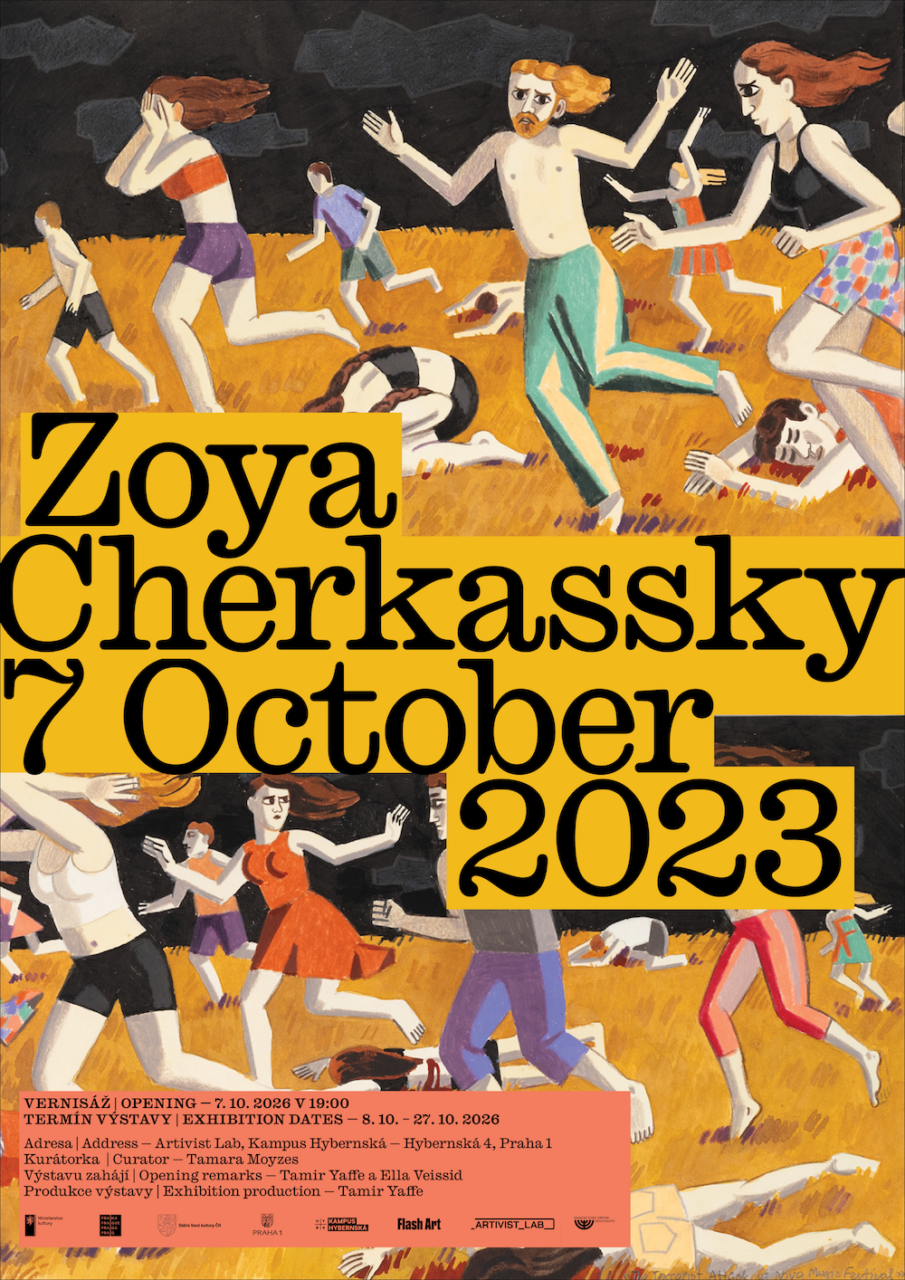
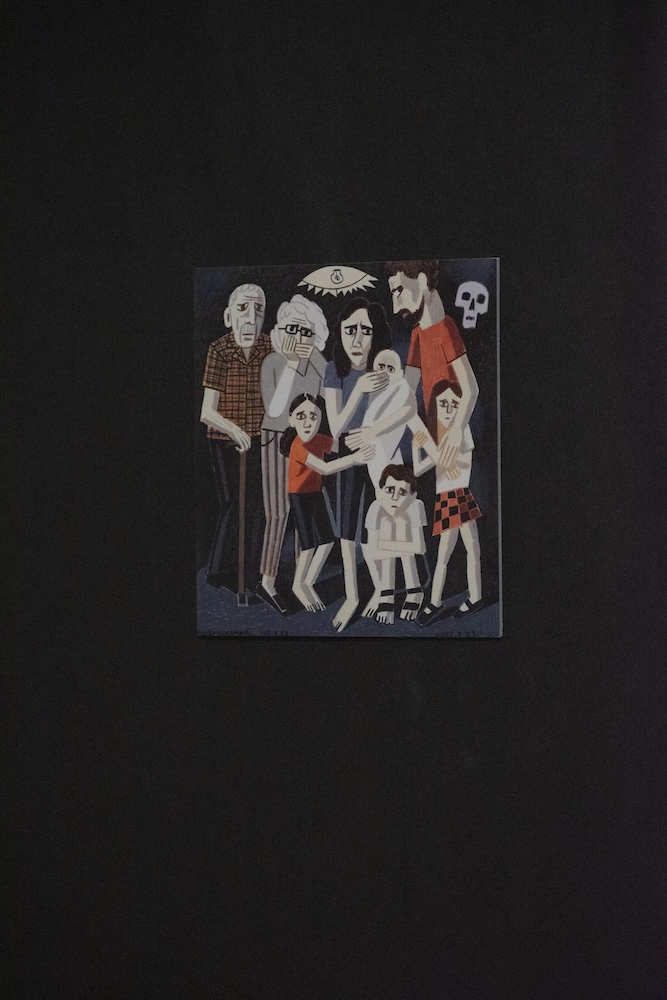
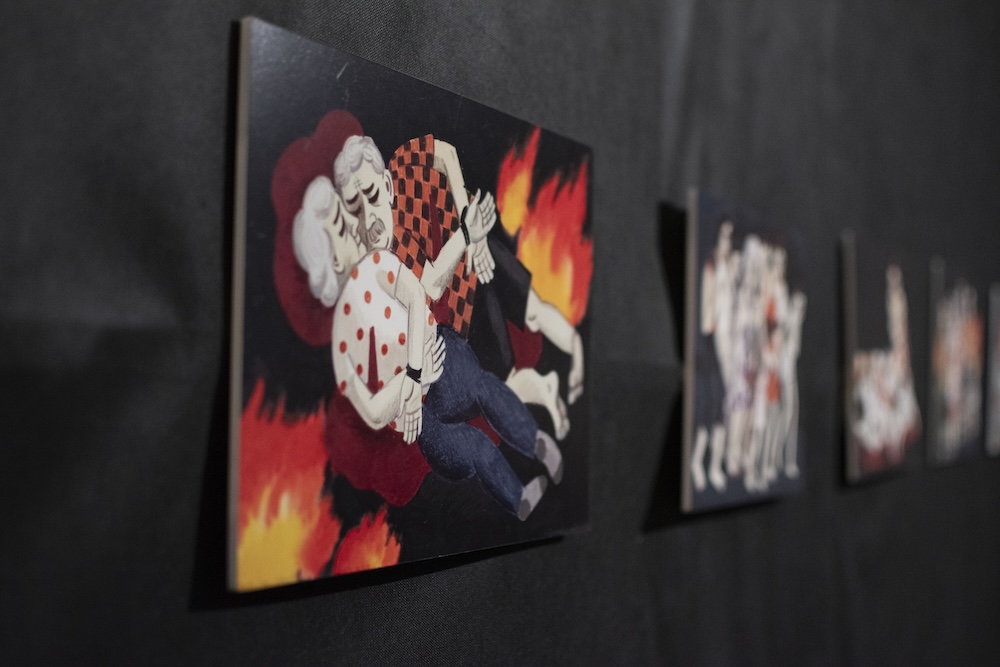
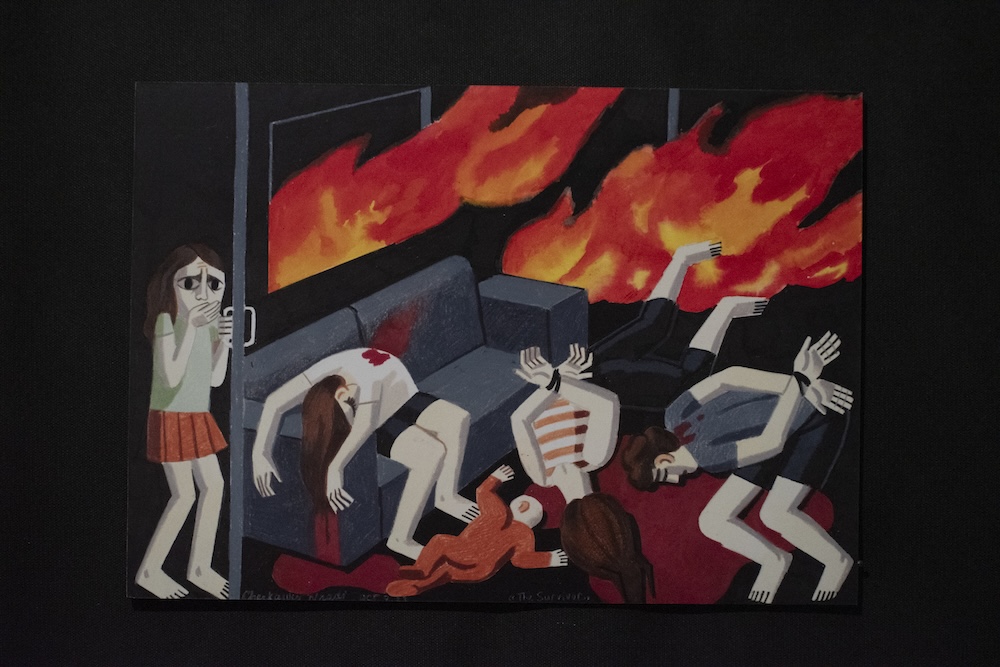
Zoya Cherkassky začala kresby věnované událostem 7. října vytvářet přibližně týden po útoku, poté co s malou dcerou odjela z Izraele. Pracovala s materiály, které si mohla vzít s sebou, s tužkami, voskovkami, fixy a akvarelem.
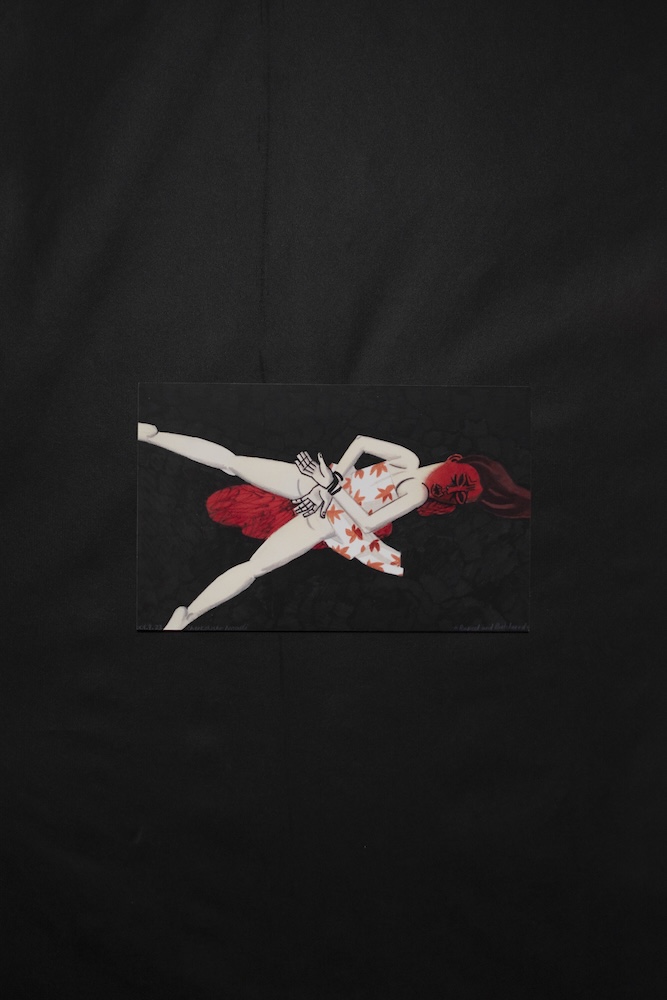
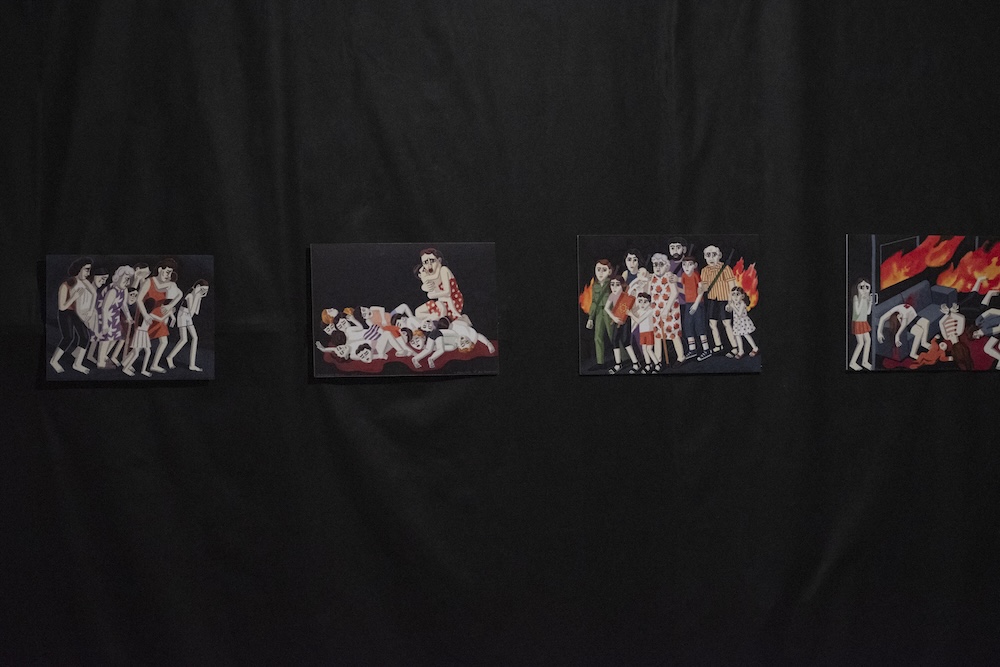
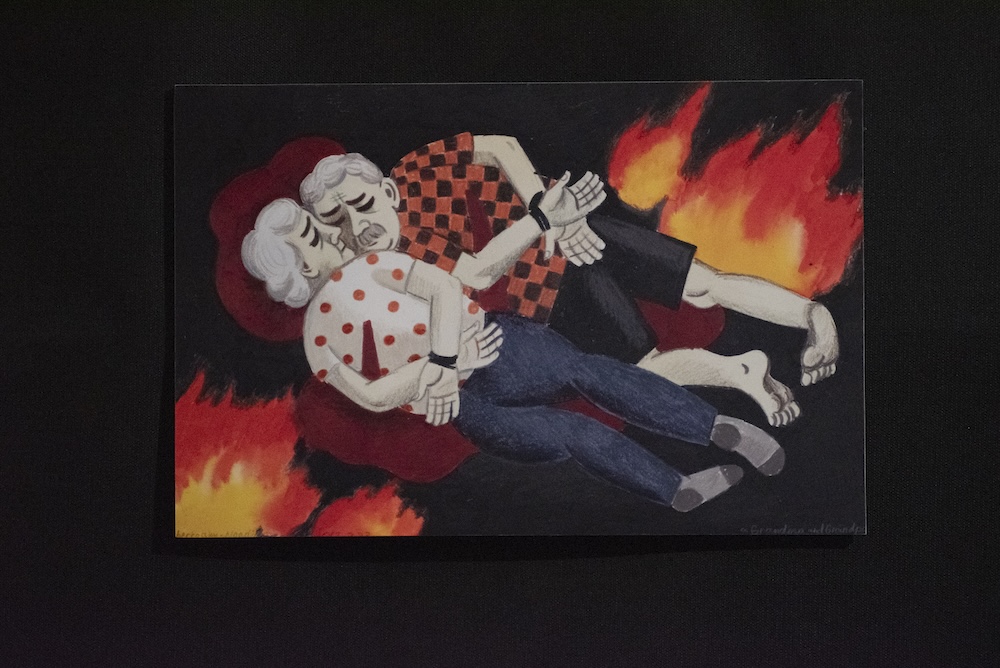
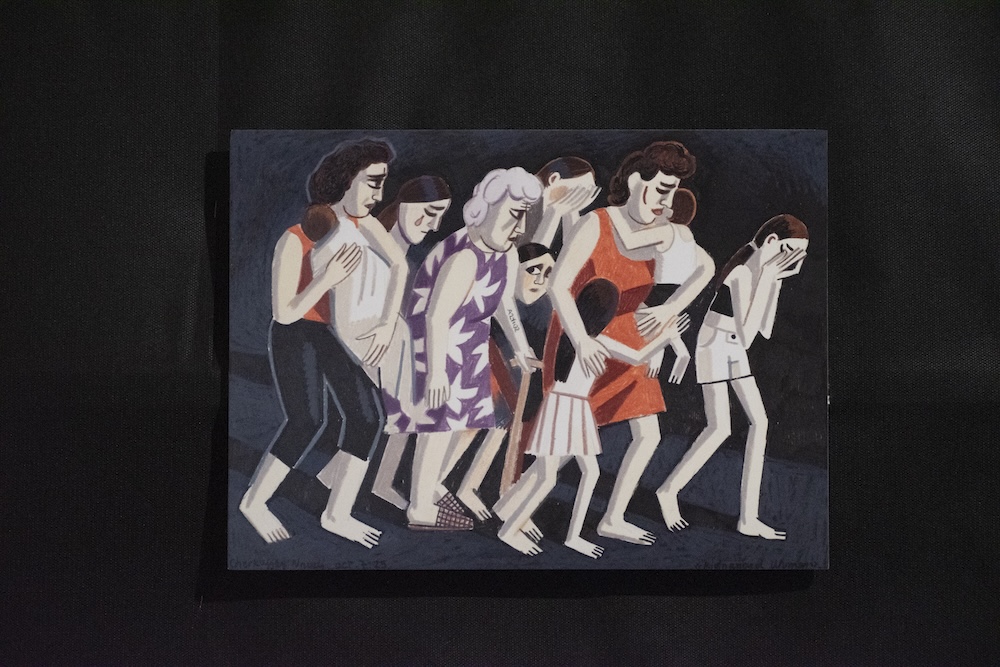
Vznikl soubor bezprostředních obrazových reakcí na událost, od níž tehdy ještě nebylo možné získat historický odstup. Cherkassky zachycuje únosy, sexuální násilí, strach a zkázu i okamžiky, kdy lidé prostřednictvím telefonů a sociálních sítí sledovali zprávy o probíhajícím útoku.
Její kresby nejsou retrospektivní rekonstrukcí. Jsou obrazovým svědectvím vznikajícím téměř současně s traumatickou událostí.
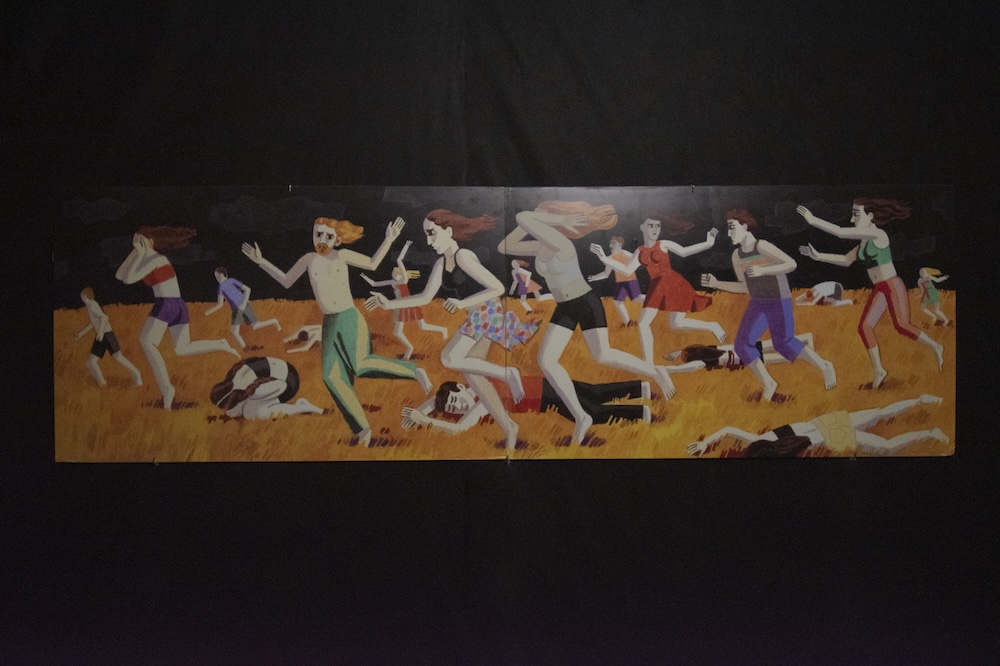
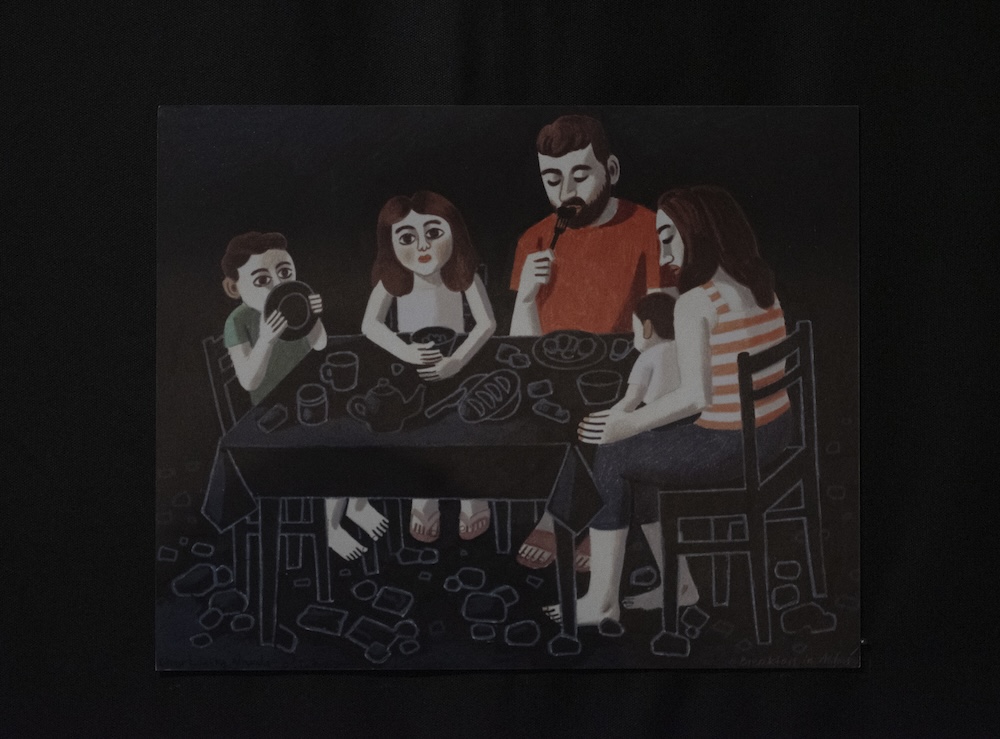
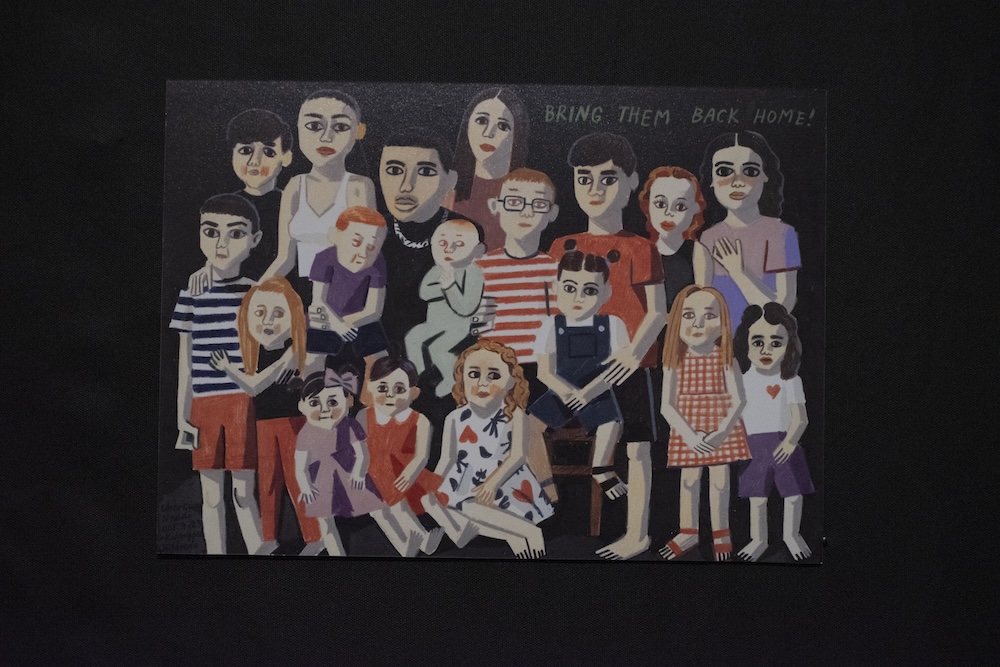
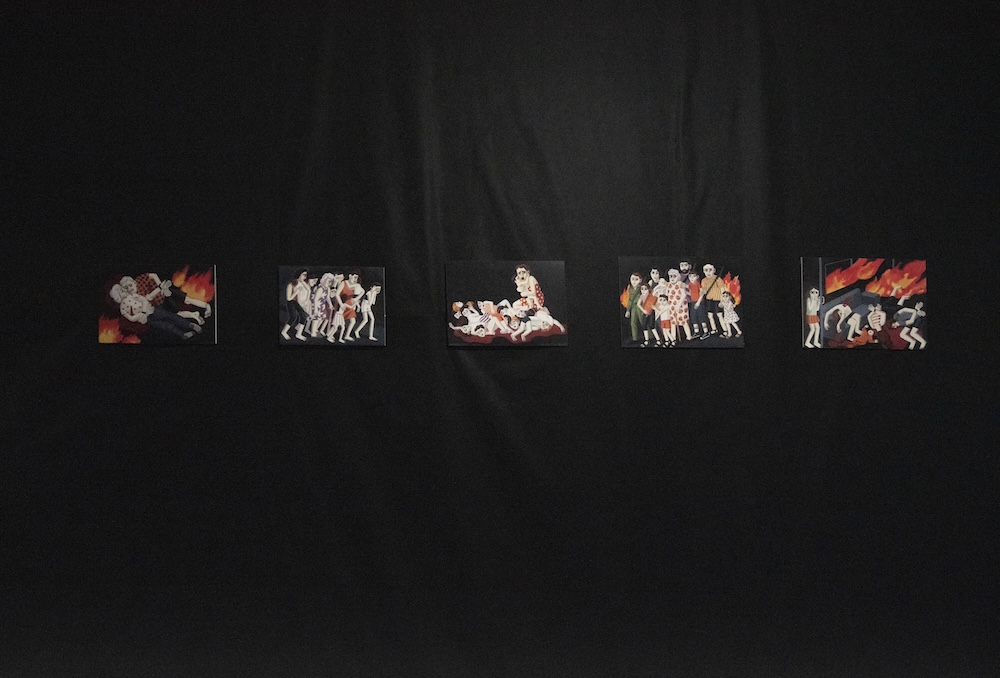
Výrazné barvy vystupují z černého pozadí a zdánlivě jednoduchý, místy téměř ilustrativní způsob kresby vstupuje do ostrého kontrastu s brutalitou zobrazovaných situací. Cherkassky přitom navazuje na dlouhou tradici uměleckého zobrazování války a civilního utrpení. V její práci se současně projevuje zkušenost dětství v Sovětském svazu a znalost vizuálního jazyka realismu a jeho schopnosti bezprostředně komunikovat politickou a společenskou událost.
Cherkassky se dlouhodobě věnuje tématům antisemitismu, rasismu, xenofobie, migrace a zkušenosti války. Její tvorbu proto nelze redukovat na ilustraci jediné politické pozice. V minulosti kriticky reagovala také na násilí páchané na Palestincích (The History of Violence, 2016; After Pogrom, 2023). Série 7 October 2023 je konkrétní uměleckou reakcí na konkrétní událost, na útok 7. října a na zkušenost lidí vystavených vraždění, sexuálnímu násilí, únosům a strachu.
Pro tvorbu Zoyi Cherkassky je charakteristická schopnost empatie vůči individuálnímu lidskému neštěstí bez ohledu na národnost či příslušnost k jedné ze stran konfliktu, stejně jako kritický pohled na společnost, který se neomezuje pouze na jednu stranu. Příznačné je v tomto smyslu označení Cherkassky jako „izraelské umělkyně, která uráží všechny“ (Judith Shulevitz, The Israeli Artist Who Offends Everyone, fortgansevoort.com, 2024).
Právě schopnost kritického pohledu, ochota vnímat skutečnost v její složitosti a zasazovat jednotlivé události do širšího kontextu jsou dnes mimořádně důležité. Konflikt nelze redukovat na jednoduché rozdělení světa na dvě strany, z nichž pouze jedna má právo na vlastní zkušenost, bolest a smutek. Právě schopnost připustit současně více perspektiv, aniž by bolest jedněch rušila bolest druhých, se z veřejného prostoru stále více vytrácí.
Soubor 7 October 2023 byl krátce po svém vzniku představen v The Jewish Museum v New Yorku a následně získán do jeho sbírky (The Jewish Museum, 2023–2024). V Praze jsou proto díla prezentována ve formě vysoce kvalitních reprodukcí se souhlasem umělkyně.
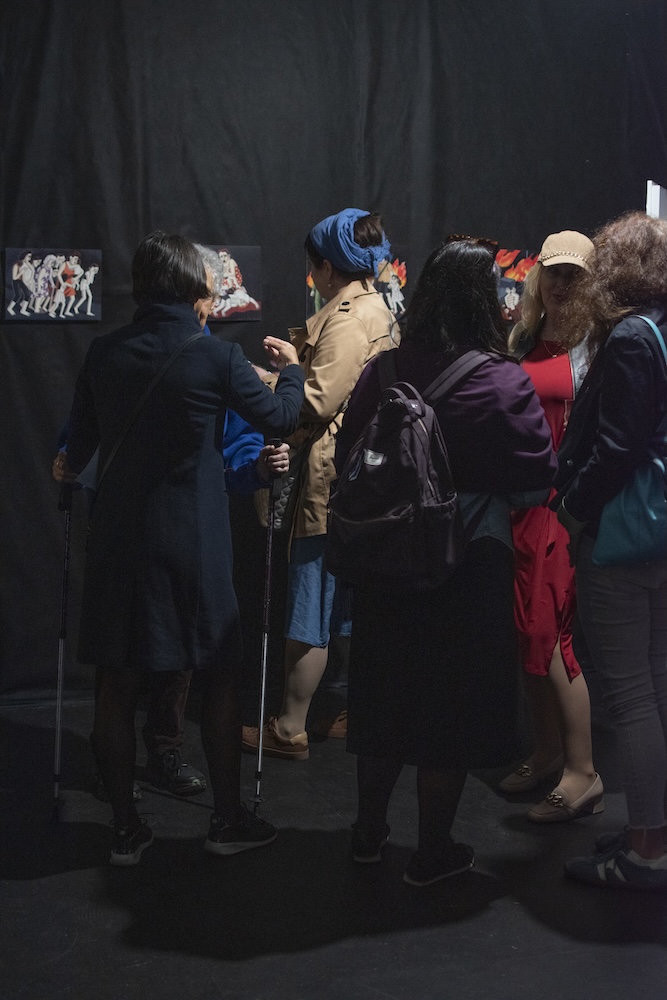
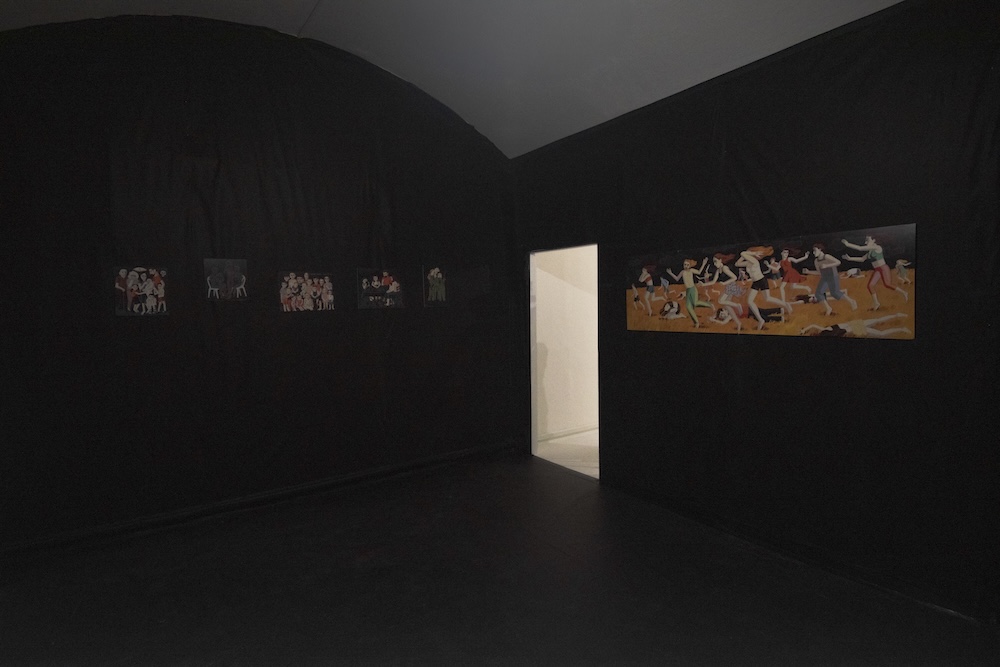
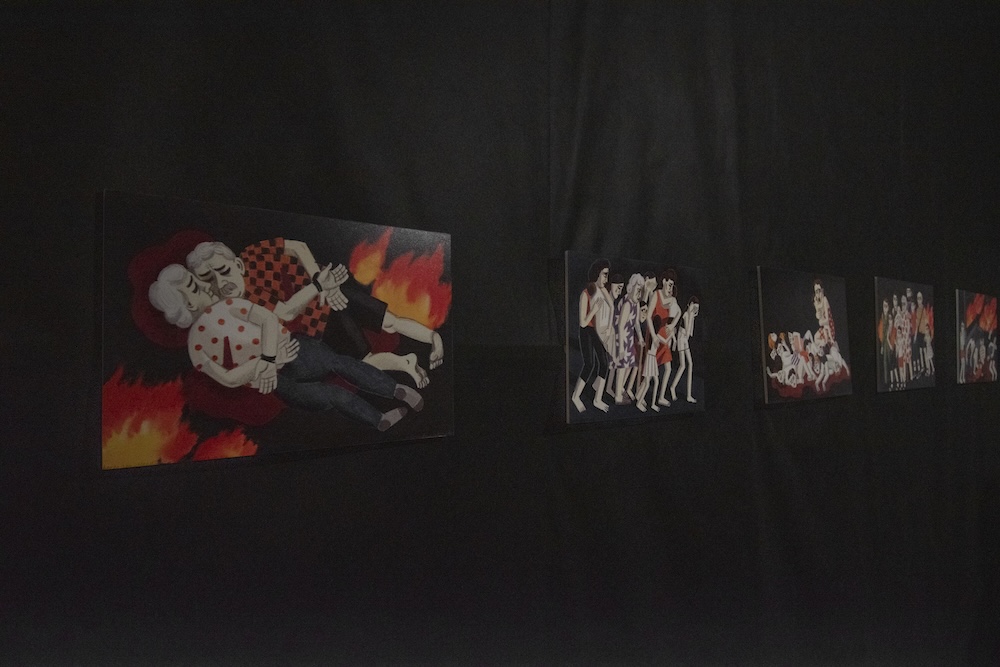
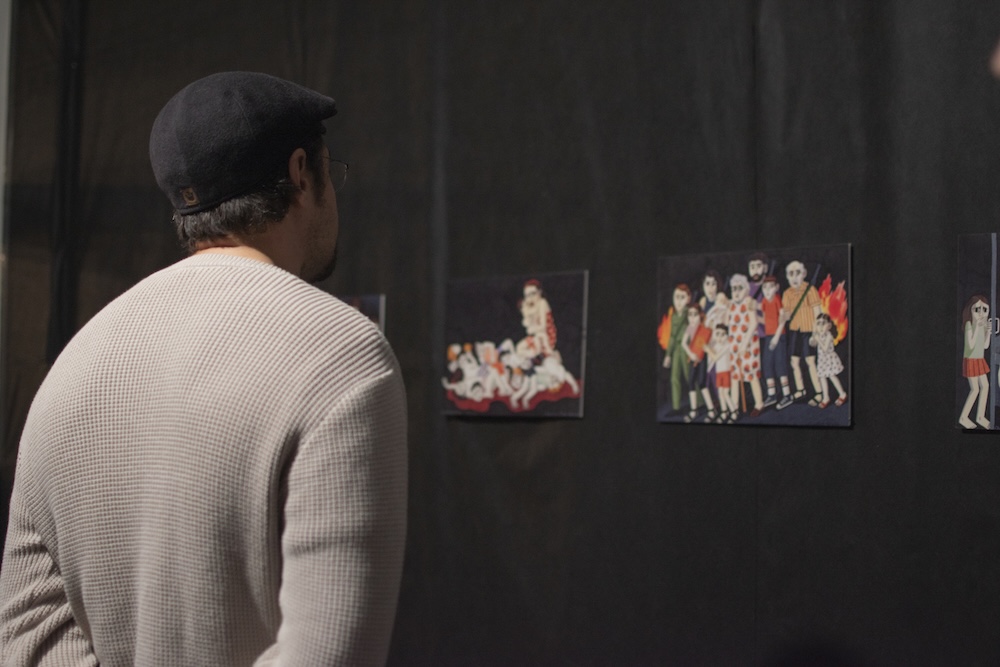
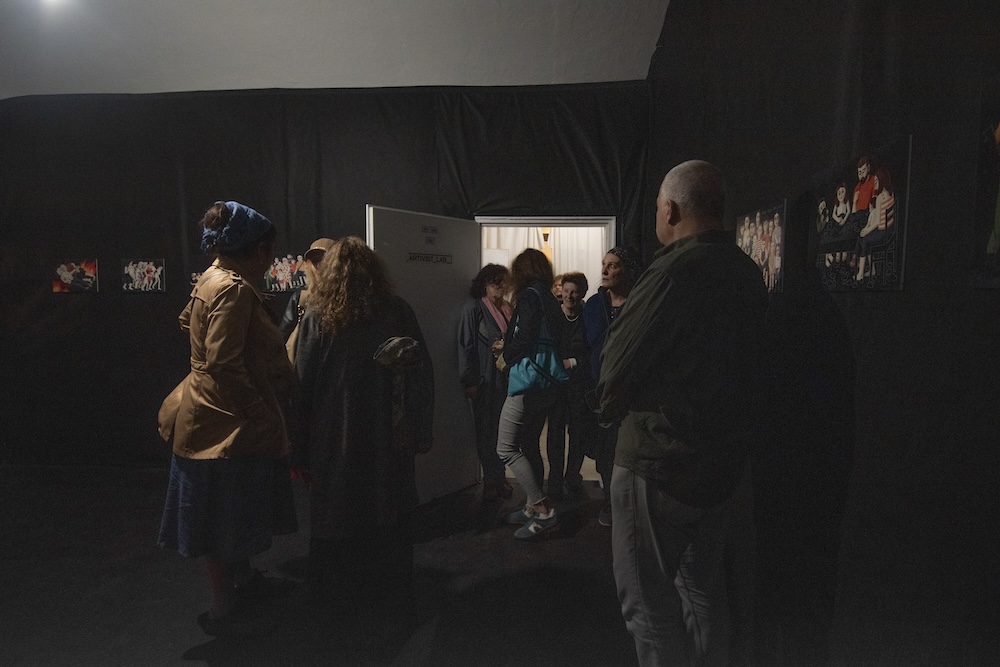
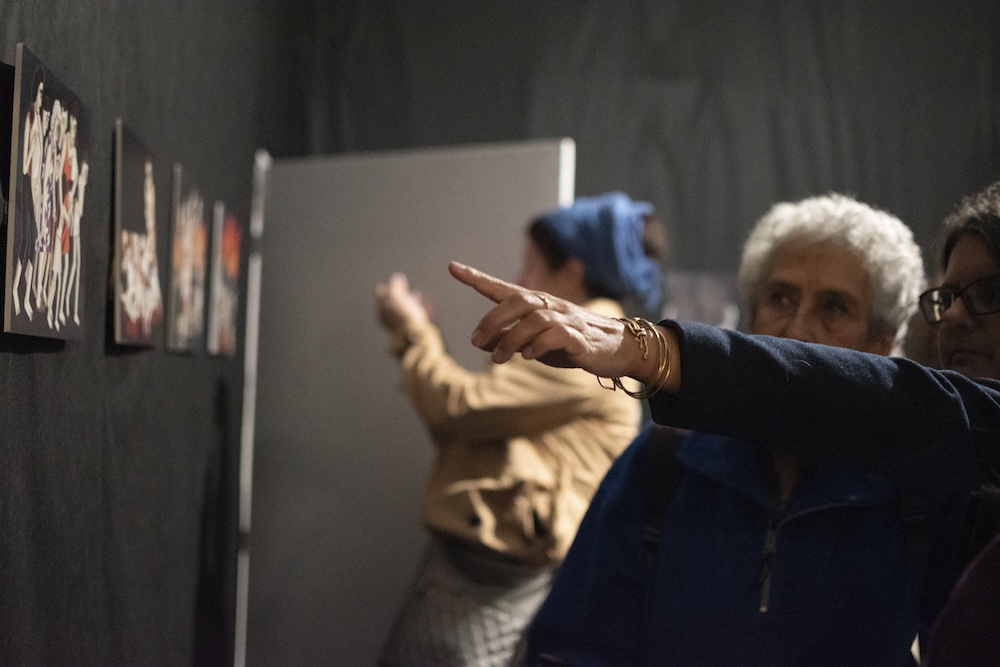
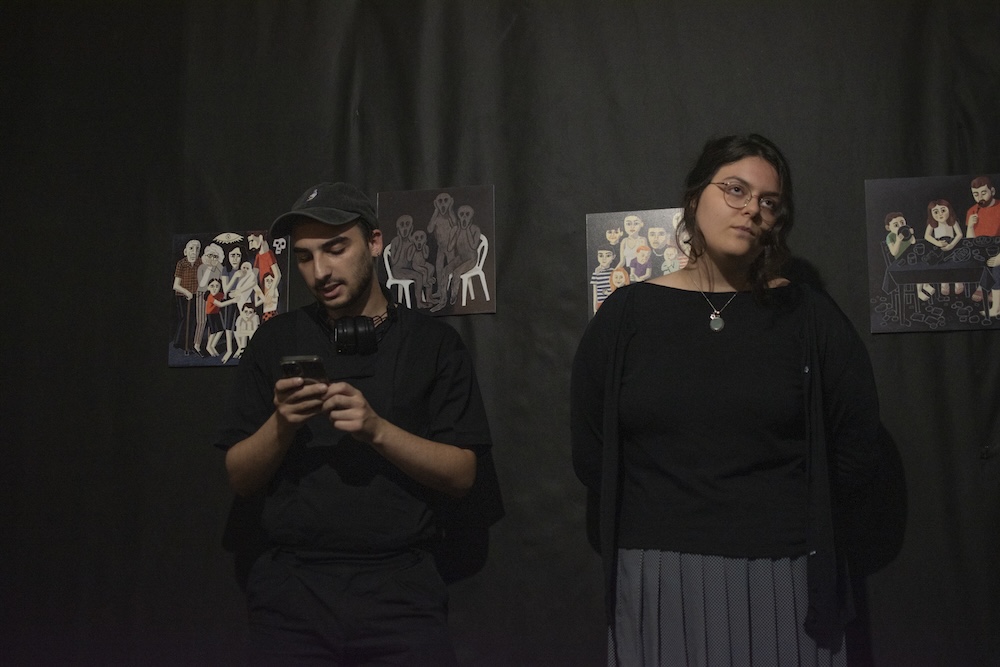
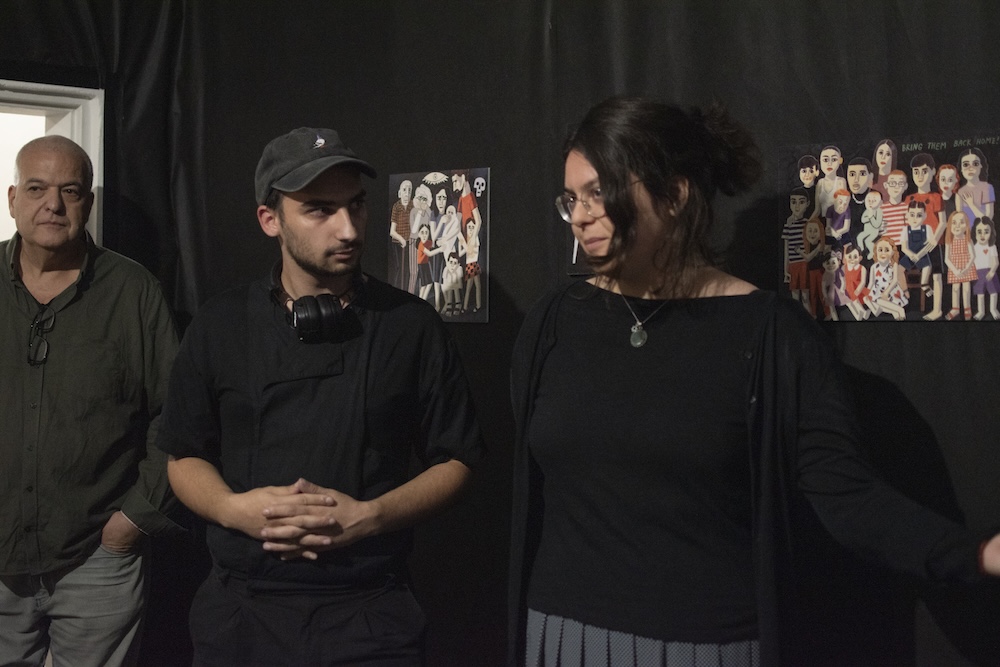
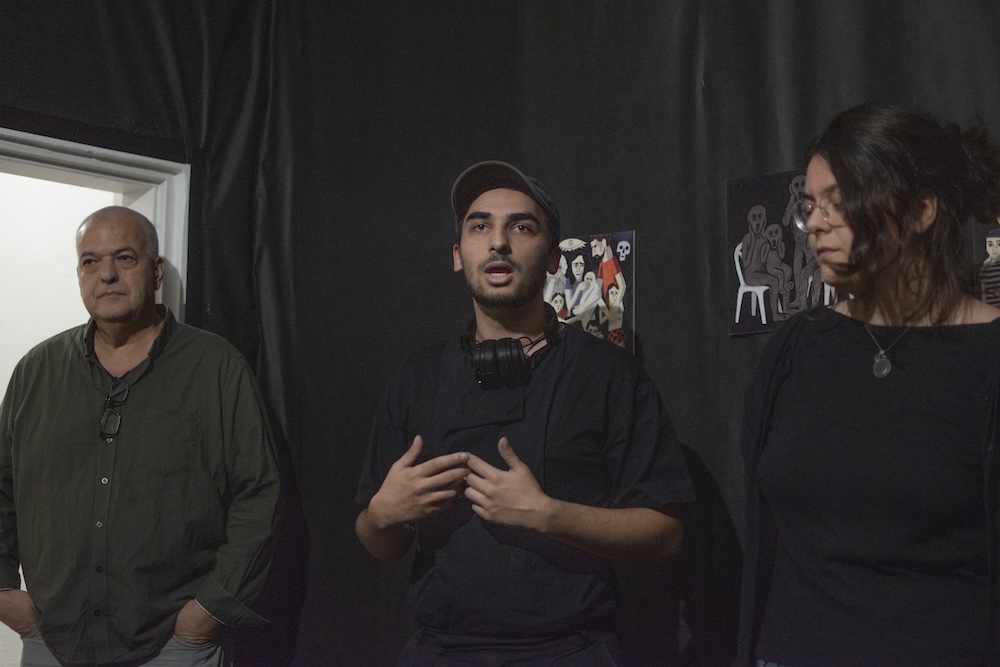
Většina kreseb je instalována v původních formátech, na černé stěně. Temné prostředí potlačuje architekturu galerie a soustřeďuje pozornost na jednotlivé obrazy, jejich barevnost a intenzitu zobrazovaných situací.
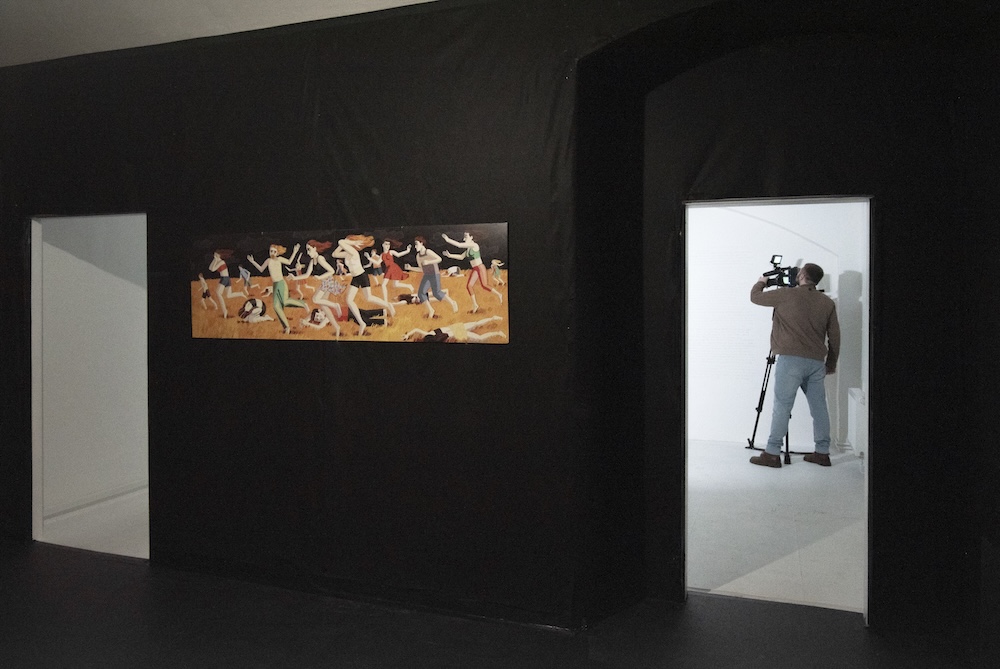
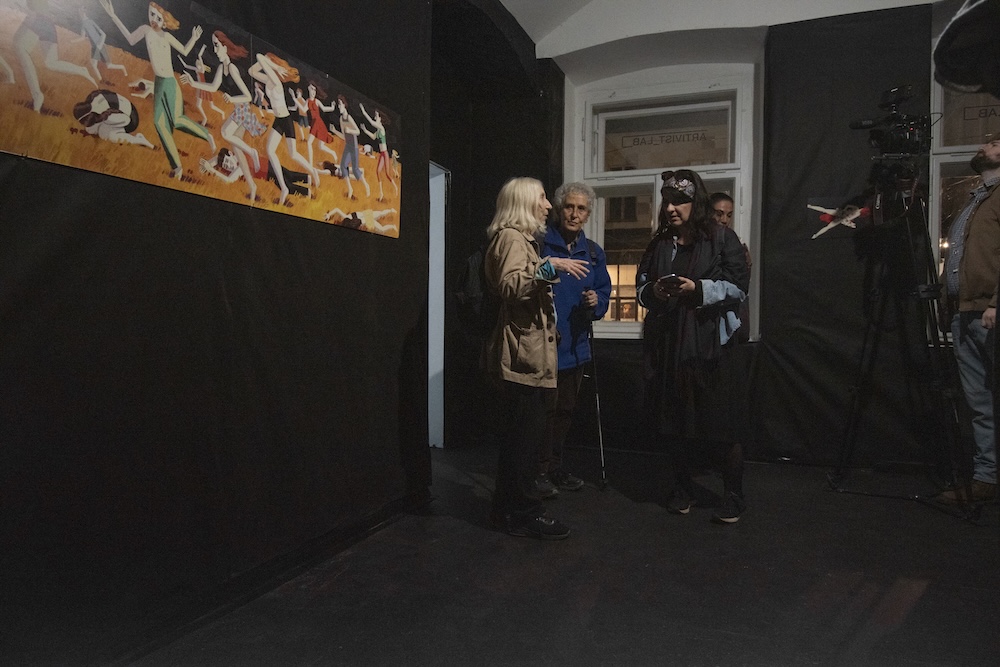
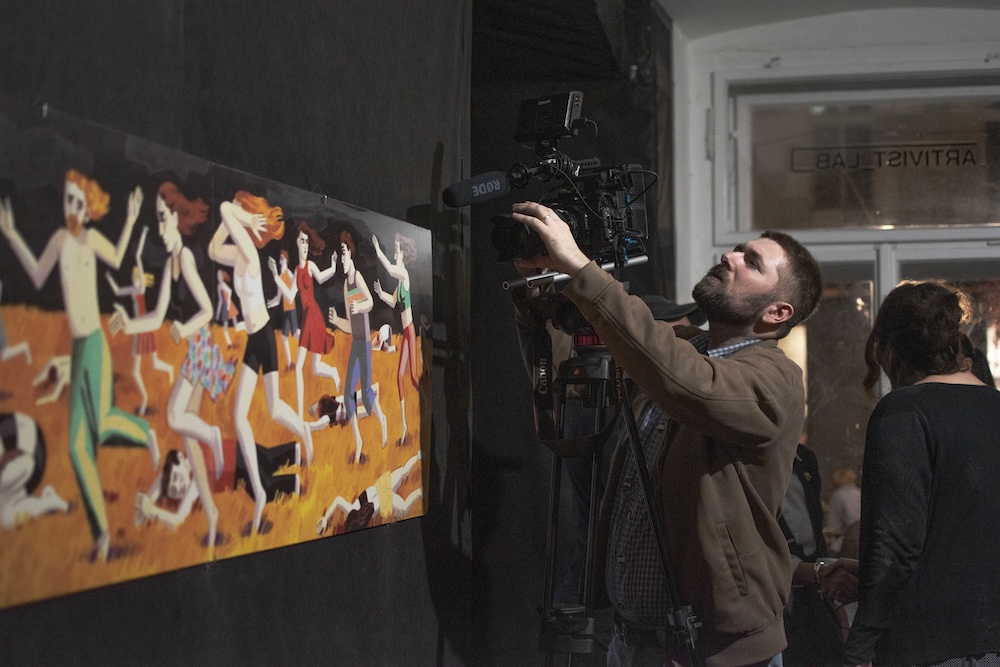
Výjimkou je jedno z klíčových děl vztahujících se k masakru na hudebním festivalu Nova. To opouští původní měřítko kresby a zabírá celou stěnu galerie. Divák se s ním setkává bezprostředně po vstupu. Obraz už není pouze objektem, na který se díváme z bezpečné vzdálenosti. Vstupuje do našeho fyzického prostoru.
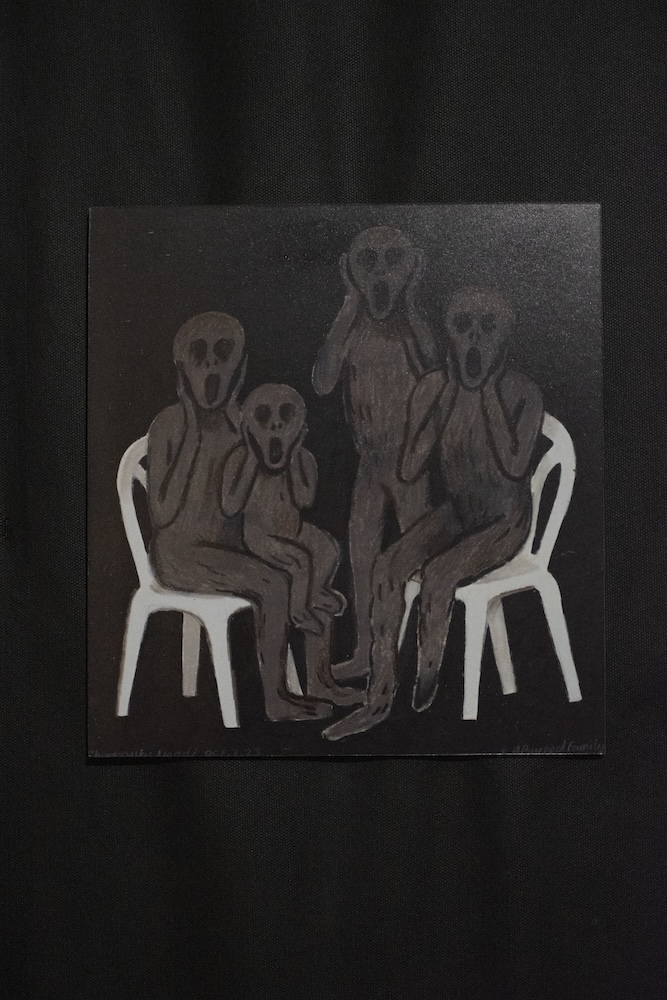
Další dílo překračuje hranice galerie a vstupuje do veřejného prostoru ve formě vlajky. Zachycuje zděšení a strach lidí sledujících prostřednictvím obrazovek zprávy o probíhajícím útoku. Soukromý okamžik bezmoci se tím proměňuje ve veřejný obraz paměti.
Druhá místnost mění způsob, jakým o 7. říjnu vypovídáme. Od obrazu přecházíme ke jménu.
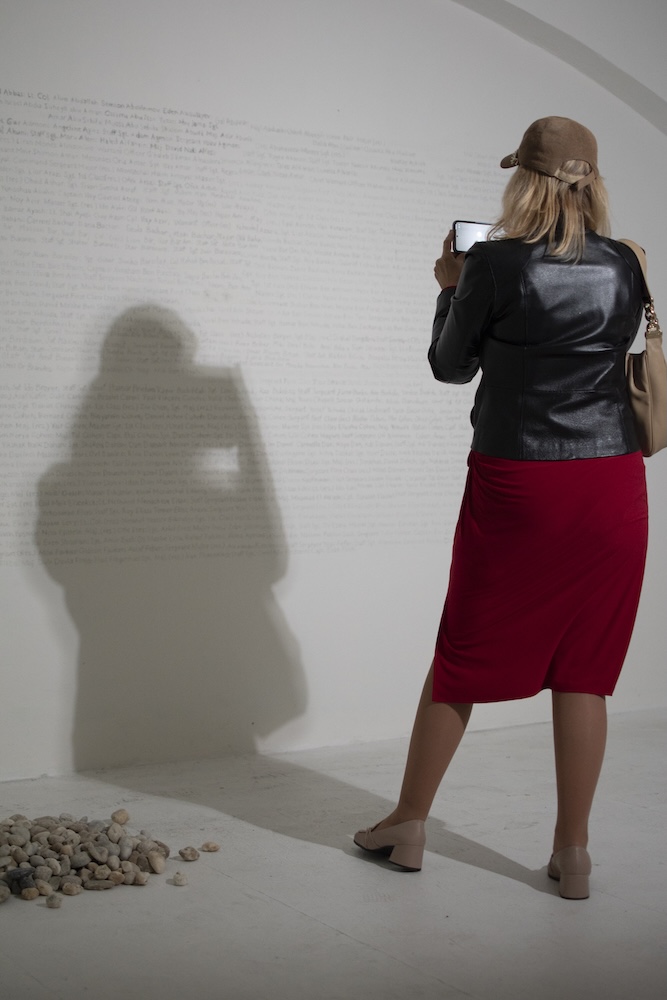
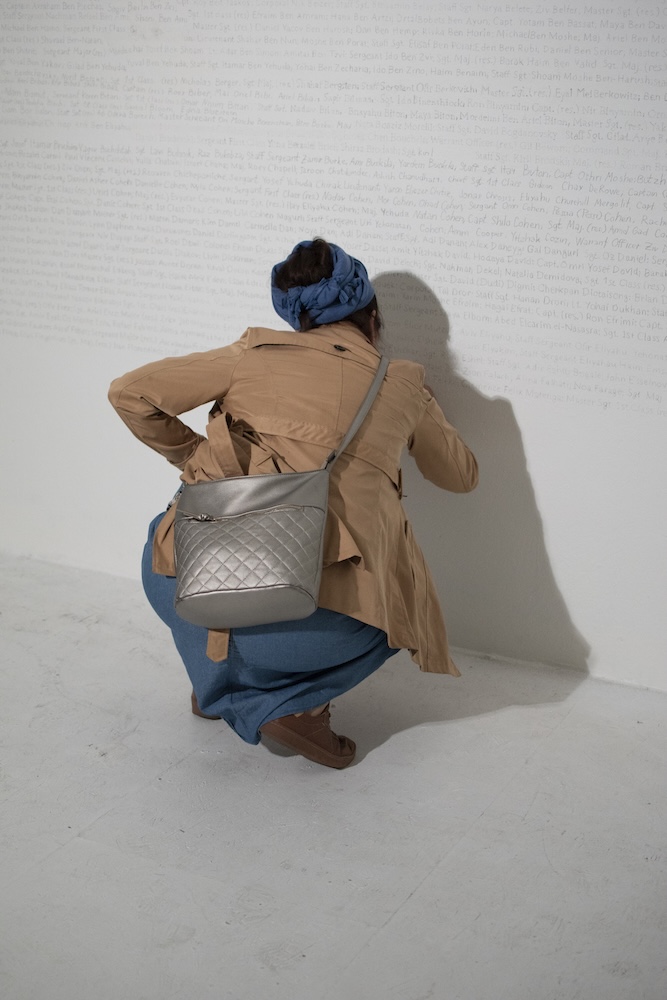
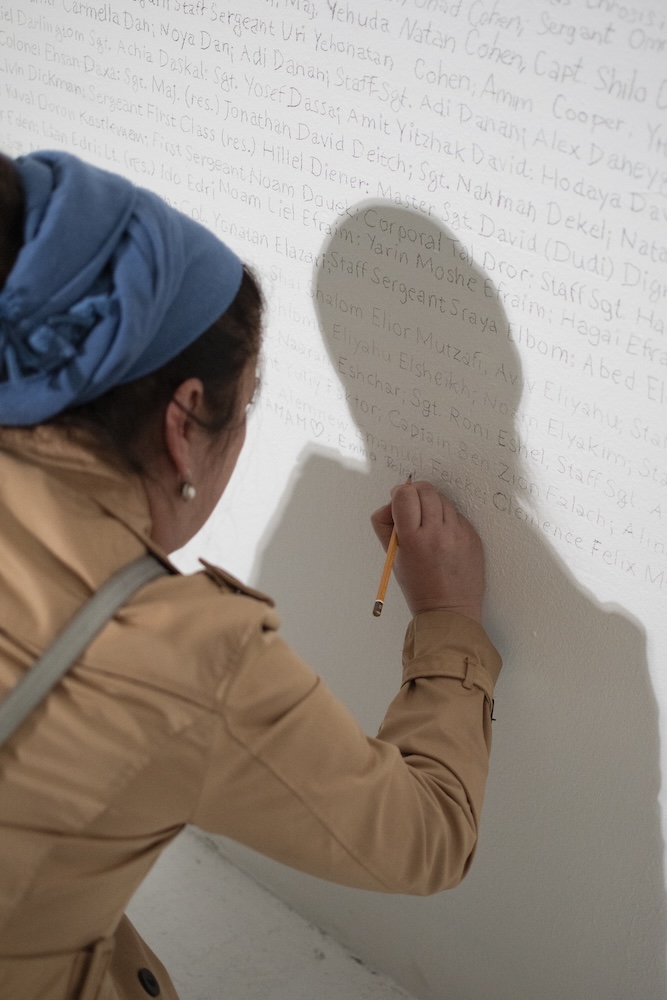
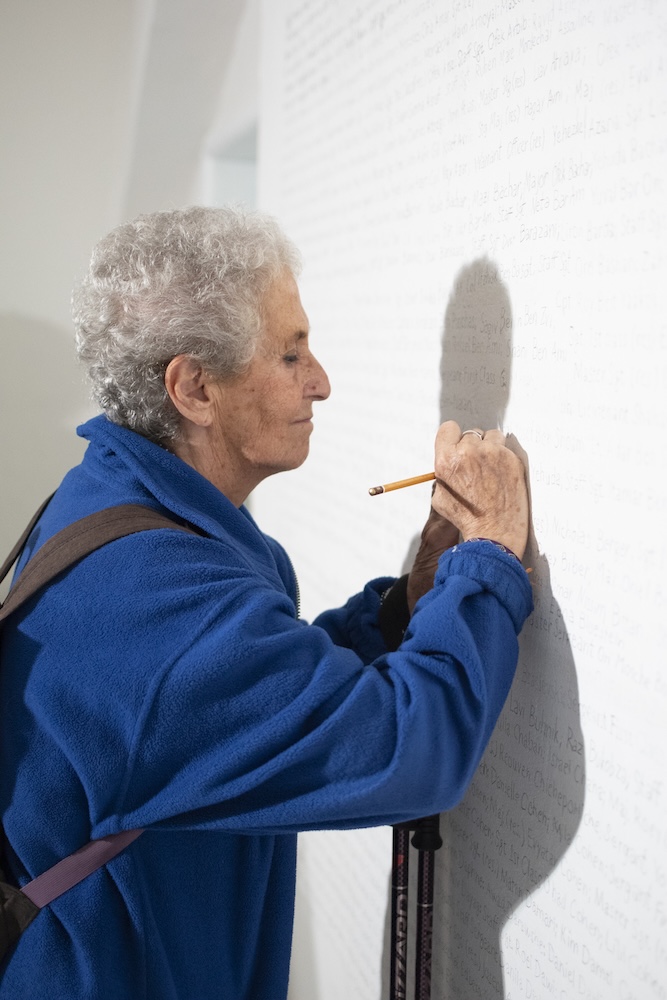
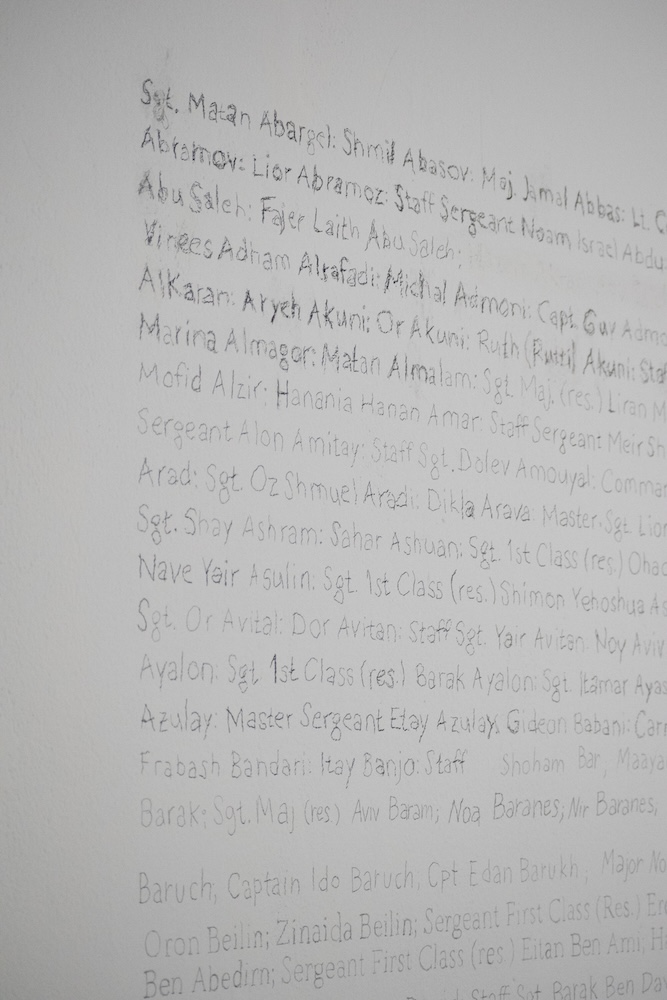
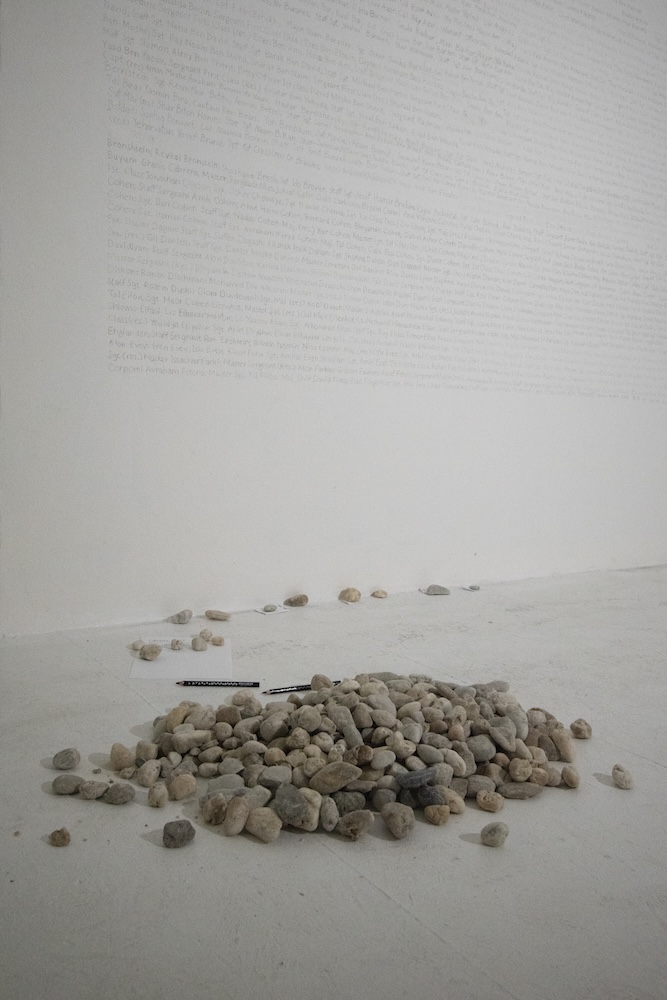
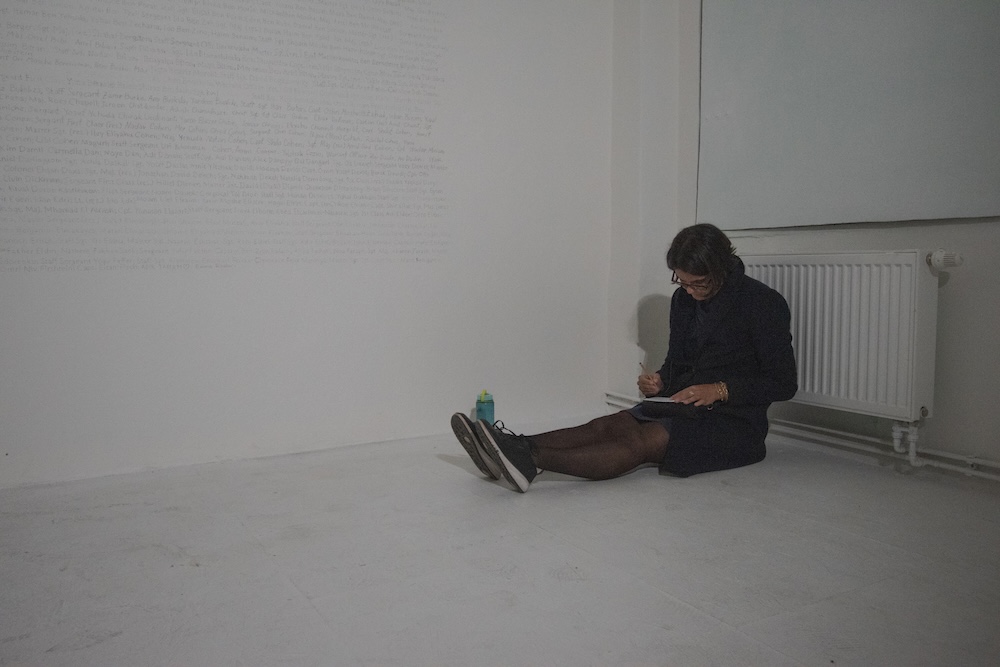
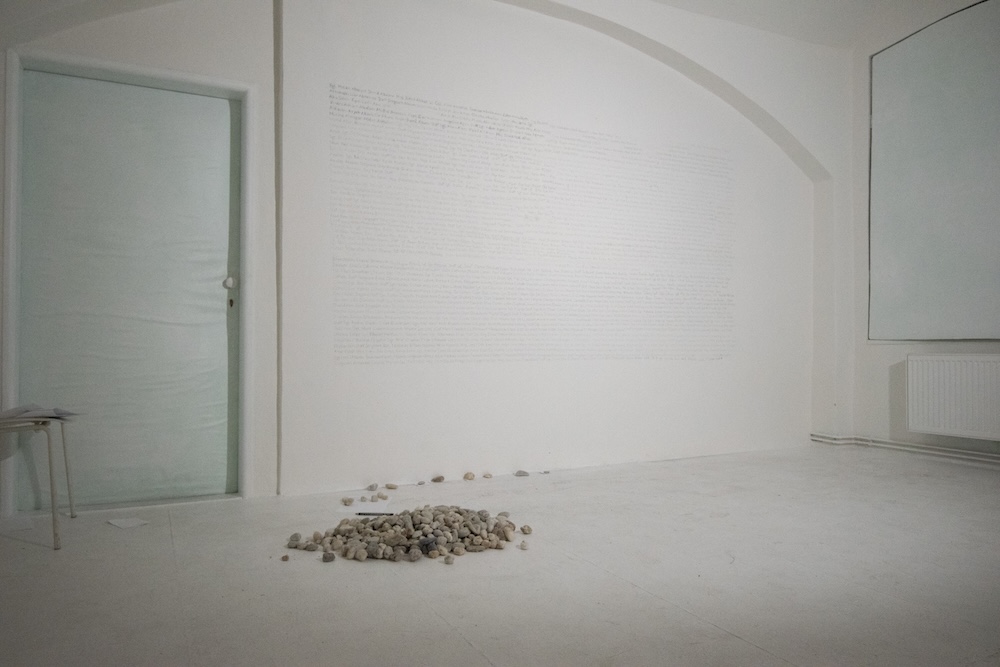
Na stěnách jsou ručně napsána jména obětí útoku. Píší je mladí Židé a Izraelci žijící v České republice, generace vyrůstající s vědomím paměti šoa, která je zároveň nositelem vlastní současné zkušenosti.
Instalace vědomě vstupuje do dialogu s jedním z nejvýznamnějších míst židovské paměti v Praze, Památníkem obětí šoa v Pinkasově synagoze. Na jeho stěnách je ručně zaznamenáno více než 78 000 jmen židovských obětí z českých zemí (Židovské muzeum v Praze). Koncepce památníku stojí na zásadním principu, že každé jméno představuje konkrétní osud a záznam jednoho konkrétního života.
Odkaz na Pinkasovu synagogu navazuje na její způsob práce s pamětí. Proti anonymitě čísla staví jméno jednotlivce. Stejný princip je podstatný i zde. Jméno není statistický údaj. Je stopou jednoho života.
Vypsání jmen je zároveň gestem navrácení individuality lidem, kteří mohou být ve veřejném prostoru redukováni na číslo, národnost nebo občanství. Každé napsané jméno připomíná, že před kategorií „Izraelec“ nebo „oběť 7. října“ existoval konkrétní člověk se vztahy, rodinou, minulostí a budoucností, která mu byla odňata.
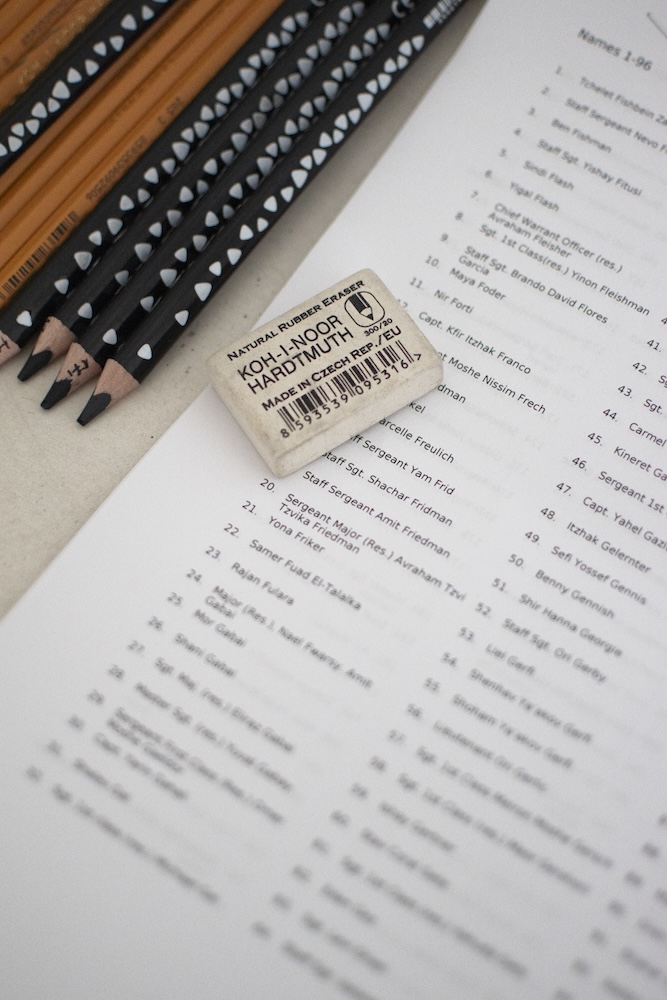
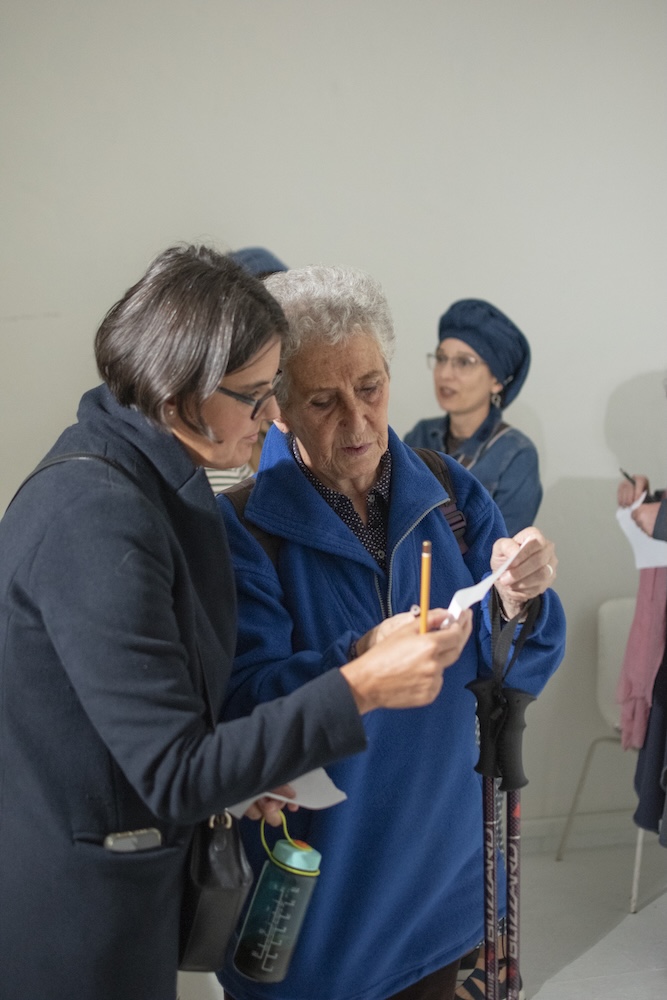
Návštěvník může do vznikajícího památníku sám vstoupit. Jména obětí záměrně nejsou dopsána všechna. Návštěvník si může vybrat jedno z nich a napsat ho na stěnu. Poté má možnost napsat dopis zavražděnému člověku, jeho rodině nebo někomu, koho nikdy osobně nepoznal.
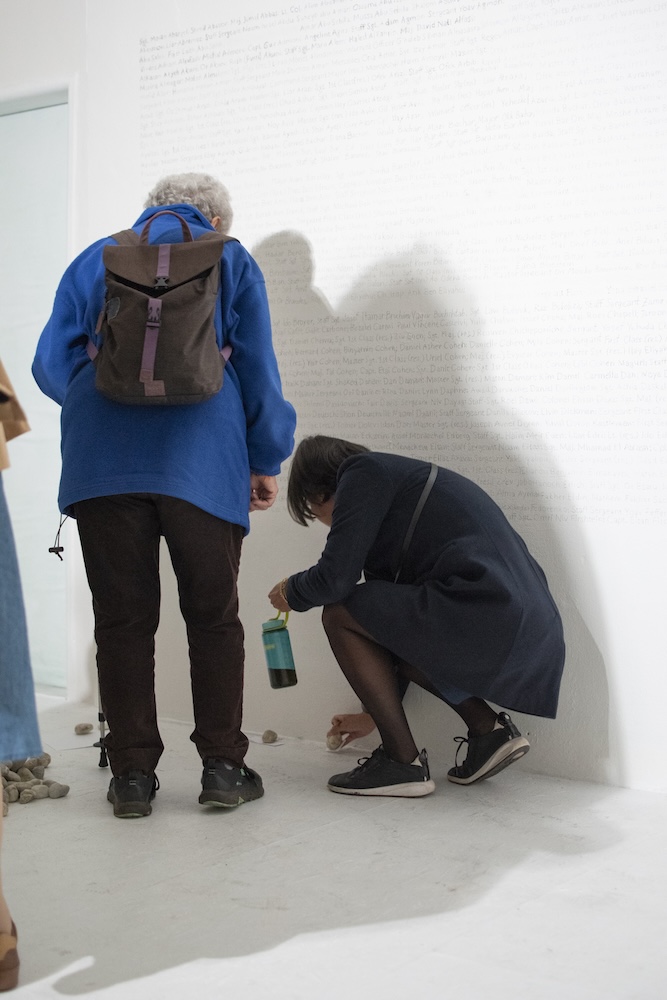
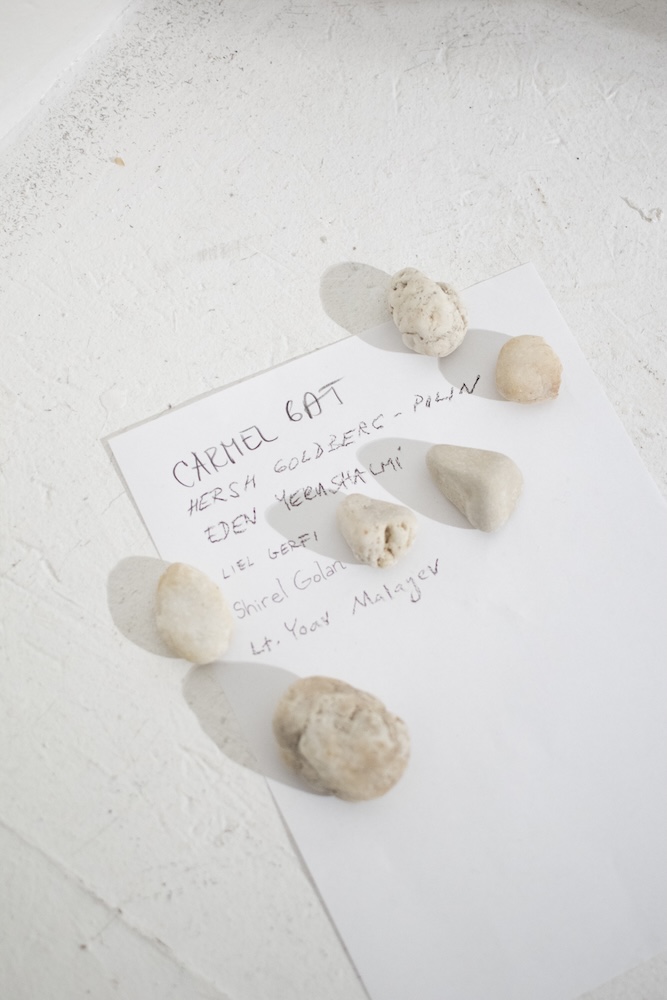
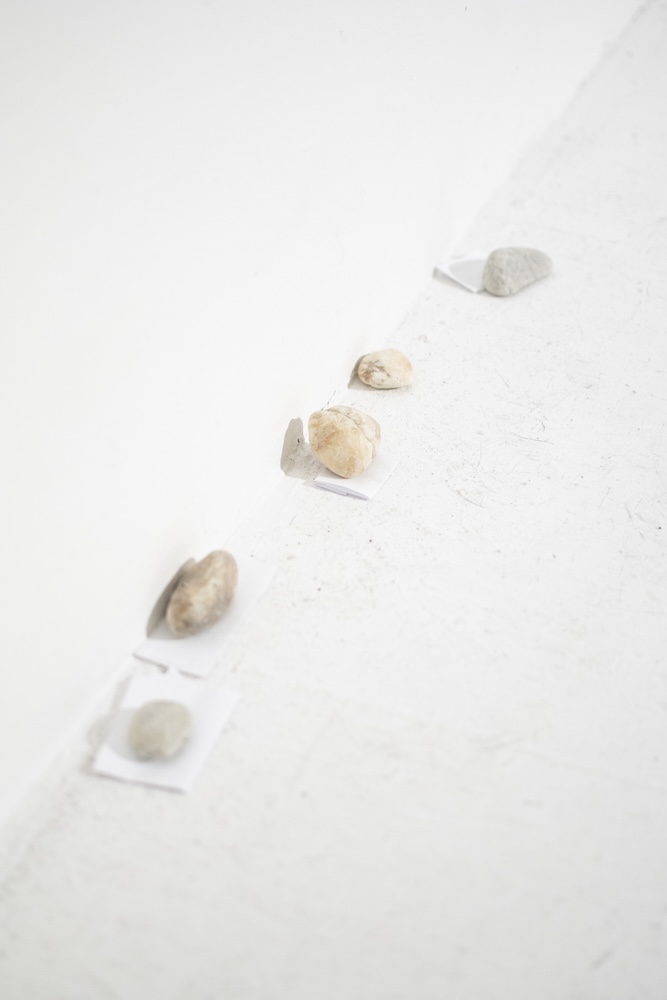
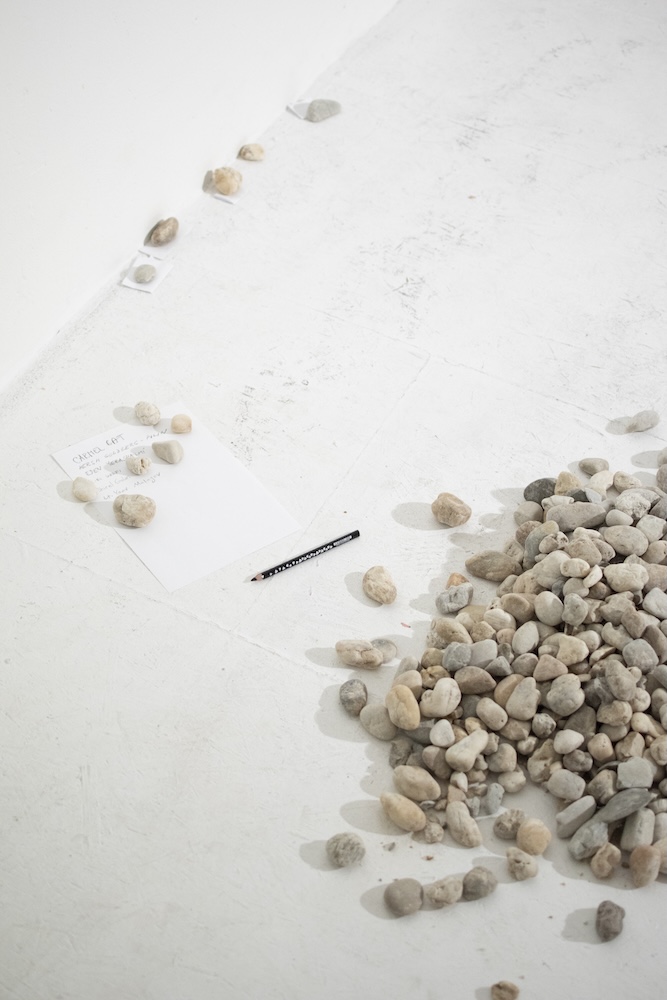
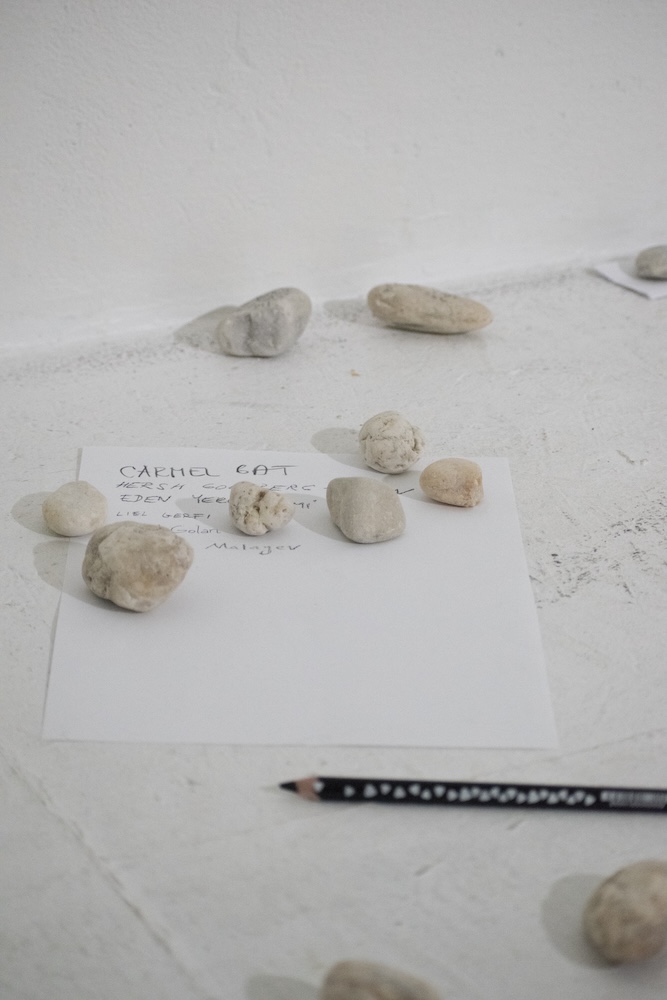
Dopis následně položí pod kámen. Kámen odkazuje k židovské tradici připomínání zemřelých, při níž návštěvník zanechává na hrobě drobný kámen jako fyzickou stopu své přítomnosti a paměti. Dopis připomíná papírky s žádostmi, které se vkládají do spár Zdi nářků nebo zanechávají u hrobu rabbiho Löwa v Praze.
Během trvání výstavy budou kameny postupně přibývat. Z jednotlivých osobních gest začne v galerii vznikat společný, neustále se proměňující památník, kolektivní socha vytvářená návštěvníky.
Samotná výstava vznikla jako kolektivní práce židovské komunity mladých lidí společně s mladými Izraelci a Izraelkam žijícími v České republice, kteří se intenzivně podíleli na její přípravě, organizaci i instalaci. Skutečnost, že výstavu věnovanou paměti, ztrátě a truchlení společně vytváří právě tato komunita – generace mladých lidí, z nichž mnozí patří ke čtvrté generaci po šoa – je podstatnou součástí jejího významu. Paměť zde není pouze tématem výstavy, ale také něčím, co se předává, sdílí a znovu formuje prostřednictvím společné práce.
Dvě místnosti tvoří dvě autonomní, ale vzájemně propojené části. První pracuje s obrazem a svědectvím Zoyi Cherkassky. Druhá s jménem, individuální pamětí a participativním aktem smutku. V první místnosti jsme svědky. Ve druhé jsme vyzváni k osobnímu gestu.
Výstava nechce návštěvníkovi předepisovat politickou interpretaci války. Žádá však něco elementárnějšího. Na chvíli odmítnout logiku, podle níž musí být lidské utrpení nejprve politicky prověřeno, než mu dovolíme stát se předmětem naší empatie. Možnost truchlit za zavražděného člověka by neměla být politickým privilegiem. Je jedním ze základních projevů lidskosti.
Tamara Moyzes, kurátorka
Zoya Cherkassky: 7 October 2023
Vernisáž: 7. 10. 2026, 19:00
Výstava: 8.–27. 10. 2026
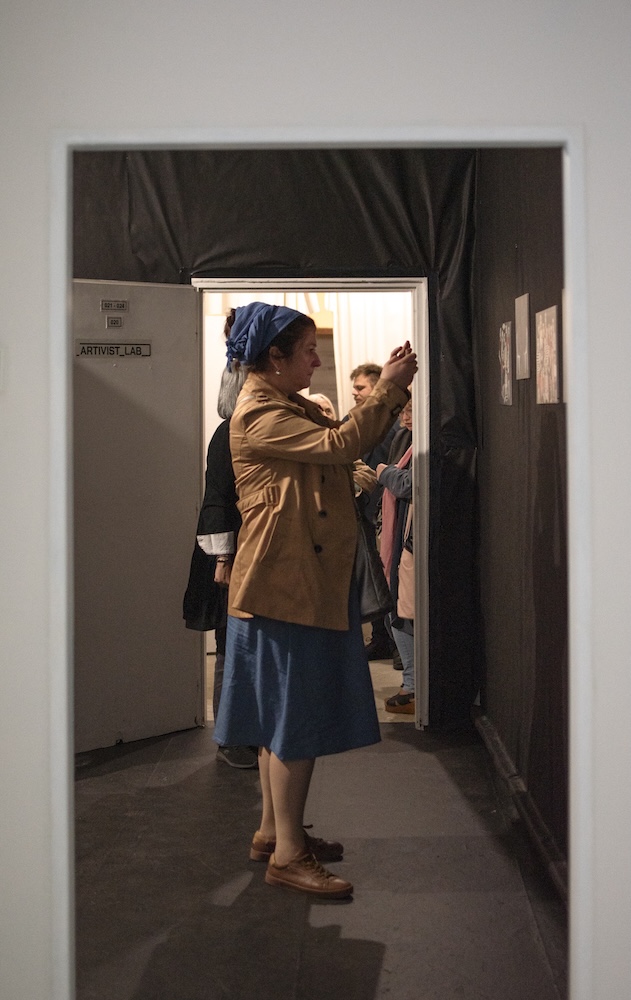
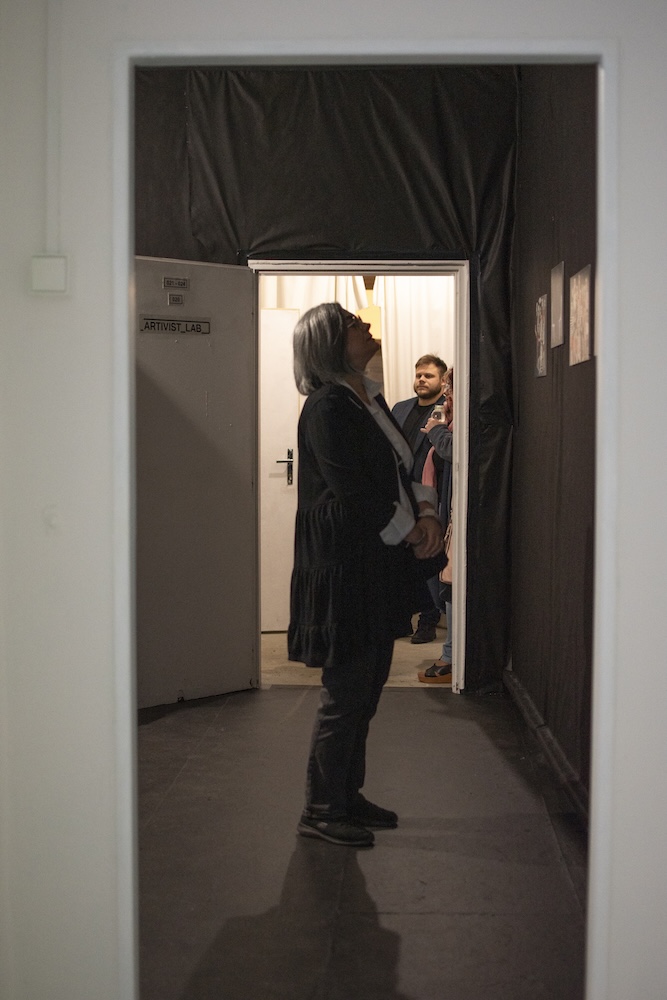
Kde: Artivist Lab, Kampus Hybernská, Hybernská 4, Praha 1
Kurátorka: Tamara Moyzes
Kokurátor: Tamir Yaffe
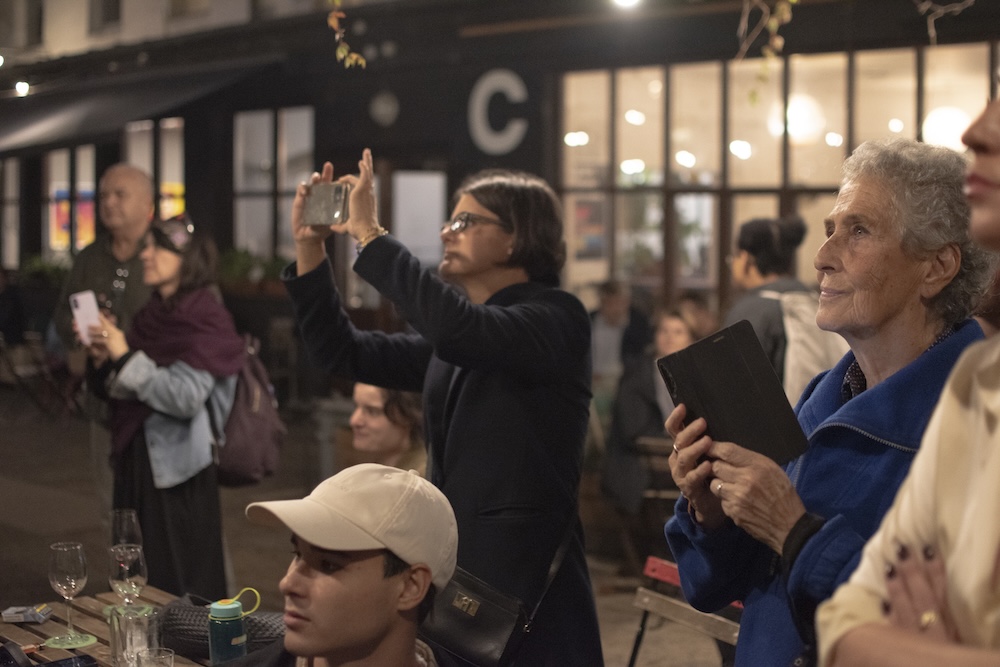
Výstavu zahájí: Tamir Yaffe a Ella Veissid
Produkce výstavy: Tamir Yaffe
Výstava vznikla za podpory Ministerstva kultury ČR, Státního fondu kultury, Magistrátu hlavního města Prahy, Městské části Praha 1 a Nadačního fondu obětem holocaustu.
Zoya Cherkassky (*1976, Kyjev, Ukrajina) je izraelská umělkyně ukrajinského původu, která žije a pracuje na Long Islandu v New Yorku. V roce 1991, ve čtrnácti letech, emigrovala s rodinou ze Sovětského svazu do Izraele. Studovala na School of Visual Theater v Jeruzalémě a na HaMidrasha School of Art při Beit Berl College. Od roku 2011 je členkou umělecké skupiny New Barbizon. Ve své tvorbě se dlouhodobě zabývá migrací, identitou, antisemitismem, rasismem, xenofobií, sociálními nerovnostmi, válkou a každodenním životem různých komunit izraelské společnosti. Její vlastní zkušenost migrace ze Sovětského svazu do Izraele se výrazně promítla do jejího zájmu o život přistěhovalců a lidí stojících na okraji většinové společnosti. Cherkassky propojuje tradici figurativní a realistické malby s ironií, společenskou kritikou a empatií vůči jednotlivci. Její práce se přitom často vzpírá jednoznačnému politickému zařazení.
Kriticky se vyjadřovala k různým podobám násilí a společenského vyloučení. Ve svých dílech se věnovala zkušenosti postsovětských migrantů v Izraeli, africkým migrantům, sexuálním pracovnicím, antisemitismu i násilí vůči Palestincům. V dílech The History of Violence (2016) a After Pogrom (2023) reagovala na násilí páchané na Palestincích. Po útoku Hamásu na Izrael 7. října 2023 vytvořila soubor 7 October 2023, v němž prostřednictvím kreseb zachytila vraždění, únosy, sexuální násilí, strach a trauma civilních obětí. Série byla v letech 2023–2024 představena na samostatné výstavě v The Jewish Museum v New Yorku a následně se stala součástí jeho sbírky.
Cherkassky ve své tvorbě opakovaně odmítá jednoduché rozdělení společnosti na jednoznačně definované politické tábory. Její práce vychází z pozorování konkrétních lidí a jejich individuálních zkušeností a současně kriticky reaguje na ideologickou rigiditu, společenské stereotypy a mechanismy vylučování. Cherkassky vystavovala v řadě významných mezinárodních institucí, mimo jiné v The Israel Museum v Jeruzalémě, Tel Aviv Museum of Art, The Jewish Museum v New Yorku, Neubauer Collegium for Culture and Society při University of Chicago, Künstlerhaus Bethanien v Berlíně a dalších institucích v Evropě, Izraeli a Spojených státech. V roce 2018 jí The Israel Museum věnovalo samostatnou výstavu Pravda, zaměřenou na zkušenost postsovětské imigrace do Izraele.
V letech 2025–2026 představilo Neubauer Collegium při University of Chicago její samostatnou výstavu The Global Political Crisis. V roce 2026 následovala v newyorské galerii Fort Gansevoort výstava American Cooking, v níž Cherkassky reflektuje svou další migrační zkušenost, tentokrát příchod do Spojených států a otázku toho, co znamená stát se Američankou. Její díla jsou zastoupena ve sbírkách The Israel Museum v Jeruzalémě, Tel Aviv Museum of Art, The Jewish Museum v New Yorku, Jewish Museum Berlin, Jewish Museum Vienna, Museum of Fine Arts Houston, New York Public Library, Columbia University, Johns Hopkins University, University of Michigan, University of Toronto, Weisman Art Museum a dalších veřejných a soukromých sbírkách. V roce 2023 získala čestný doktorát Open University of Israel a v roce 2025 čestný doktorát umění Ben-Gurion University of the Negev. Zoya Cherkassky je zastupována galerií Fort Gansevoort v New Yorku.
Literatura a prameny
ARENDT, Hannah. 1945. „Organized Guilt and Universal Responsibility.“ Jewish Frontier, leden 1945, s. 19–23. Později publikováno in: ARENDT, Hannah. Essays in Understanding, 1930–1954: Formation, Exile, and Totalitarianism. Ed. Jerome Kohn. New York: Harcourt Brace & Company, 1994.
JASPERS, Karl. 1946. Die Schuldfrage. Heidelberg: Lambert Schneider. Anglické vydání: The Question of German Guilt. Přel. E. B. Ashton. New York: Dial Press, 1947.
LEVINAS, Emmanuel. 1961. Totalité et infini: Essai sur l’extériorité. La Haye: Martinus Nijhoff. Anglické vydání: Totality and Infinity: An Essay on Exteriority. Přel. Alphonso Lingis. Pittsburgh: Duquesne University Press, 1969.
ORWELL, George. 1945. „Notes on Nationalism.“ Polemic: A Magazine of Philosophy, Psychology & Aesthetics, č. 1, říjen 1945.
SHULEVITZ, Judith. 2024. „The Israeli Artist Who Offends Everyone.“ The Atlantic, 5. října 2024. V tištěném vydání publikováno pod názvem „What Zoya Sees.“
THE JEWISH MUSEUM. 2023–2024. Zoya Cherkassky: 7 October 2023. New York, 15. prosince 2023 – 18. března 2024.
WEIL, Simone. 1940–1941. „L’Iliade ou le poème de la force.“ Les Cahiers du Sud, č. 230–231, prosinec 1940 – leden 1941. Publikováno pod pseudonymem Émile Novis. Anglický překlad Mary McCarthy: „The Iliad, or the Poem of Force.“ Politics, listopad 1945.
ŽIDOVSKÉ MUZEUM V PRAZE. Památník obětí šoa z českých zemí, Pinkasova synagoga. Praha. Památník vytvořili Václav Boštík a Jiří John; jeho stěny nesou více než 78 000 ručně psaných jmen židovských obětí šoa z českých zemí


Zoya Cherkassky
7 October 2023
The exhibition 7 October 2023 deliberately opens on 7 October 2026, the third anniversary of the Hamas attack on Israel. It takes as its point of departure a simple question—one that has become increasingly difficult to ask in today’s polarised world: Do we have the right to mourn every person who has been murdered, regardless of their nationality, citizenship, or the political context into which their death is subsequently placed?
This exhibition is grounded in the conviction that we do.
War divides more than territories. It also divides our capacity for empathy. Increasingly, people are perceived primarily through collective identities—as members of states, nations, or opposing sides in a conflict. An individual life can disappear behind the category to which a person is assigned. The victim ceases to be a mother, father, daughter, son, partner, friend, or child and becomes instead a representative of one side or another—and another number.
This mechanism is not new. The wars of the twentieth century demonstrated that violence affects not only the human body but also the way in which we perceive another human being. Simone Weil described force as a mechanism capable of stripping a person of their subjectivity and turning them into a thing (Weil, 1940–1941). In conditions of war and profound social polarisation, individuality can similarly disappear behind group affiliation. A particular human being is transformed into an abstract representative of a nation, a state, or an enemy camp.
This process also transforms empathy itself. George Orwell drew attention to a form of group thinking in which entire groups of people are classified as “good” or “bad,” and the same reality is judged differently depending on who caused it and to whom it happened (Orwell, 1945). In such an environment, compassion itself can become selective. The suffering of a person whom we have assigned to the “other side” may come to be regarded as less important, less deserving of attention, or even as something that cannot legitimately be mourned in public.
It is precisely this reduction that the humanist tradition informing this exhibition seeks to resist. The value of a human life cannot increase or diminish according to the passport carried by the person who lived it. Nor can citizenship be equated with political conviction. At the end of the Second World War and in its immediate aftermath, the distinction between individual guilt and political responsibility became one of the fundamental questions of European thought. In different ways, Hannah Arendt and Karl Jaspers challenged the assumption that an individual can simply be identified with the collective, state, or nation to which they belong (Arendt, 1945; Jaspers, 1946).
This distinction remains essential today. On 7 October 2023, civilians in Israel became the targets of a terrorist attack carried out by Hamas and other armed groups, in which more than a thousand people were murdered and others were abducted, sexually assaulted, or injured. This fact stands at the origin of the exhibition and is not contingent upon the political positions held by individual victims.
Those murdered held a wide range of views. Some supported the Israeli government; others protested against it. Some were peace activists, while the political positions of many others are unknown. From the perspective of this exhibition, however, these distinctions are not decisive. None of these positions increases or diminishes the value of their lives, and none constitutes a condition for their right to be mourned.
The ways in which 7 October has, in parts of contemporary public discourse, been relativised, displaced, or overshadowed by the events that followed reveal a dangerous consequence of polarised empathy. If we are able to recognise another person’s suffering only when it conforms to our political framework, empathy ceases to function as a universal humanist principle and becomes instead a marker of allegiance to one side or the other.
The exhibition therefore rejects the notion that an Israeli victim must first prove their political innocence, distance themselves from their government, or demonstrate their relationship to Palestinians in order to be publicly mourned. A person murdered on 7 October has the right to a name, to memory, and to mourning simply because they were a human being.
It is here that humanism becomes a concrete practice within this exhibition: the capacity to see the individual human being before the political category—to see their life, their relationships, and their name. Emmanuel Levinas grounded his ethics in the encounter with the face of the Other: with a singular human being who cannot be fully reduced to a social or political category (Levinas, 1961). In the context of this exhibition, such an encounter means attempting to see, before the labels “Israeli,” “Palestinian,” “Jew,” “Arab,” “victim,” or “member of one side of the conflict,” a particular human being once again.
The humanism from which this exhibition proceeds is, at the same time, not selective. The suffering of Israeli and Palestinian civilians does not exist in competition. Empathy is not a finite resource, and acknowledging one person’s pain does not require us to deny the pain of another. The same principle that prevents us from reducing an Israeli victim to a representative of their state also prevents us from reducing a Palestinian civilian to a representative of a political or armed organisation. The capacity to preserve the humanity of the individual even within conflict is one of the fundamental conditions of humanism.
The exhibition 7 October 2023, however, consciously directs attention towards the event from which it takes its name: the terrorist attack of 7 October 2023 and the people who were murdered, sexually assaulted, abducted, or traumatised that day. In the current international climate, in which the memory of 7 October is sometimes eclipsed by the subsequent war or absorbed into political arguments, we consider it important to return attention to particular human lives and to the event itself.
Chronology matters in this respect. The terrorist attack of 7 October preceded the subsequent war in Gaza. The events that followed cannot retrospectively alter the nature of what happened to those murdered and abducted on 7 October, nor can they revoke their right to memory and public mourning. To insist upon this fact is not to establish a hierarchy of suffering. It is to reject a logic according to which later political and military events can retrospectively determine whose death we remain capable of recognising as a human tragedy.
Art has always been capable of drawing attention to what is disappearing from society or becoming difficult to articulate. This exhibition creates a space for empathy with the victims of 7 October 2023 with particular people whose individuality has often disappeared within the political language of recent years.
This is not about the political representation of a state, nor about judging the political views held by those who were murdered. It is about returning from collective identity to the individual human being. From a number to a name. From geopolitics to a human life. From an image of the victim that the public accepts or rejects according to political allegiance to a person who had a life, relationships, and a story of their own.
Zoya Cherkassky began making drawings in response to the events of 7 October approximately one week after the attack, after leaving Israel with her young daughter. She worked with materials she could take with her: pencils, crayons, markers, and watercolour.
The resulting body of work consists of immediate visual responses to an event from which historical distance was not yet possible. Cherkassky depicts abductions, sexual violence, fear, and destruction, as well as moments in which people followed reports of the unfolding attack through their phones and social media.
Her drawings are not retrospective reconstructions. They are visual testimonies produced almost concurrently with a traumatic event.
Vivid colours emerge from black backgrounds, while an apparently simple, at times almost illustrative mode of drawing enters into stark contrast with the brutality of the situations depicted. In this respect, Cherkassky engages with a long tradition of artistic representations of war and civilian suffering. Her work simultaneously reflects the experience of a childhood spent in the Soviet Union and her familiarity with the visual language of realism and its capacity to communicate political and social events with immediacy.
Cherkassky has long addressed antisemitism, racism, xenophobia, migration, and the experience of war. Her practice therefore cannot be reduced to an illustration of a single political position. In the past, she has also critically addressed violence against Palestinians (The History of Violence, 2016; After Pogrom, 2023). The series 7 October 2023 is a specific artistic response to a specific event: the attack of 7 October and the experiences of people subjected to murder, sexual violence, abduction, and terror.
Characteristic of Cherkassky’s practice is her capacity for empathy with individual human suffering irrespective of nationality or affiliation with one side of a conflict, together with a critical view of society that is not confined to one political camp. In this sense, Judith Shulevitz’s description of Cherkassky as “The Israeli Artist Who Offends Everyone” is particularly apt (Shulevitz, The Atlantic, 2024).
The capacity for critical reflection, the willingness to perceive reality in its complexity, and the ability to situate individual events within a broader context are exceptionally important today. Conflict cannot be reduced to a simple division of the world into two sides, only one of which is entitled to its own experience, pain, and grief. The capacity to hold multiple perspectives simultaneously, without allowing the pain of one group to cancel out that of another, is increasingly disappearing from public discourse.
The series 7 October 2023 was presented shortly after its creation at The Jewish Museum in New York and subsequently acquired for the museum’s collection (The Jewish Museum, 2023–2024). In Prague, the works are therefore presented as high-quality reproductions with the artist’s permission.
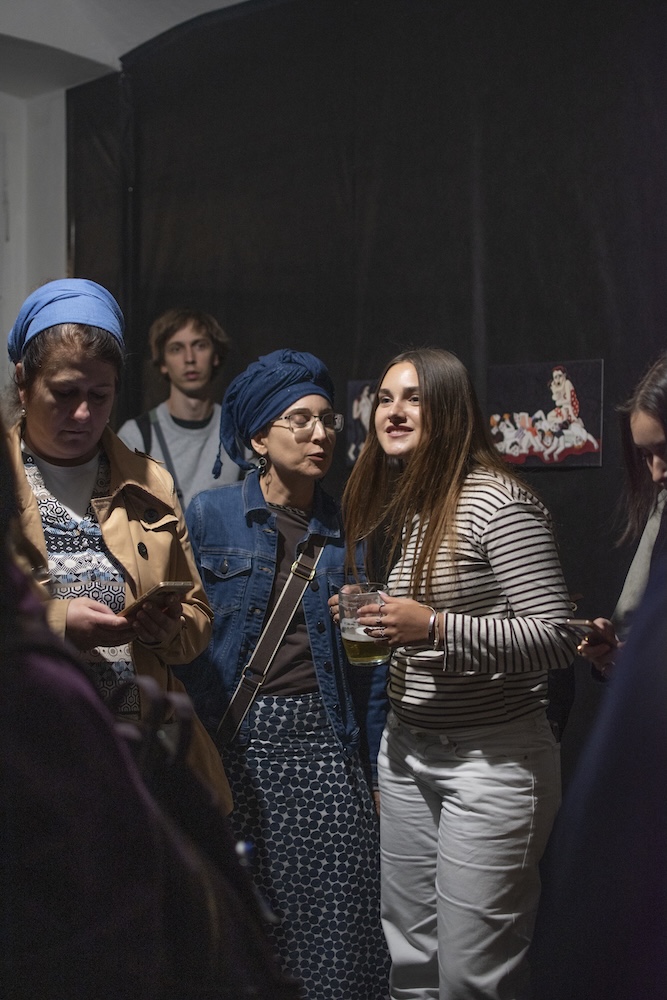
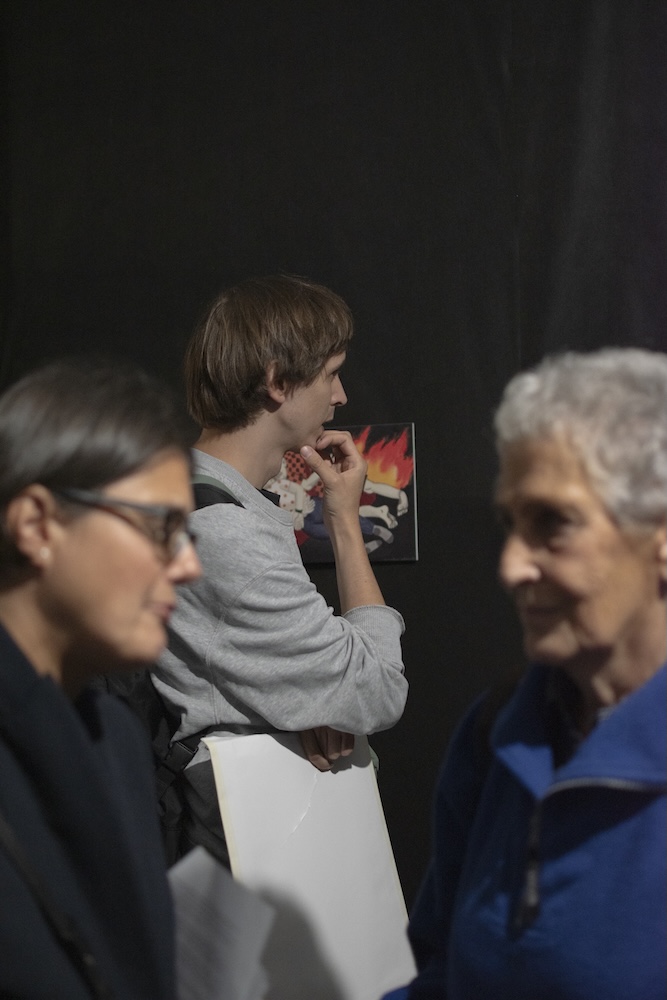
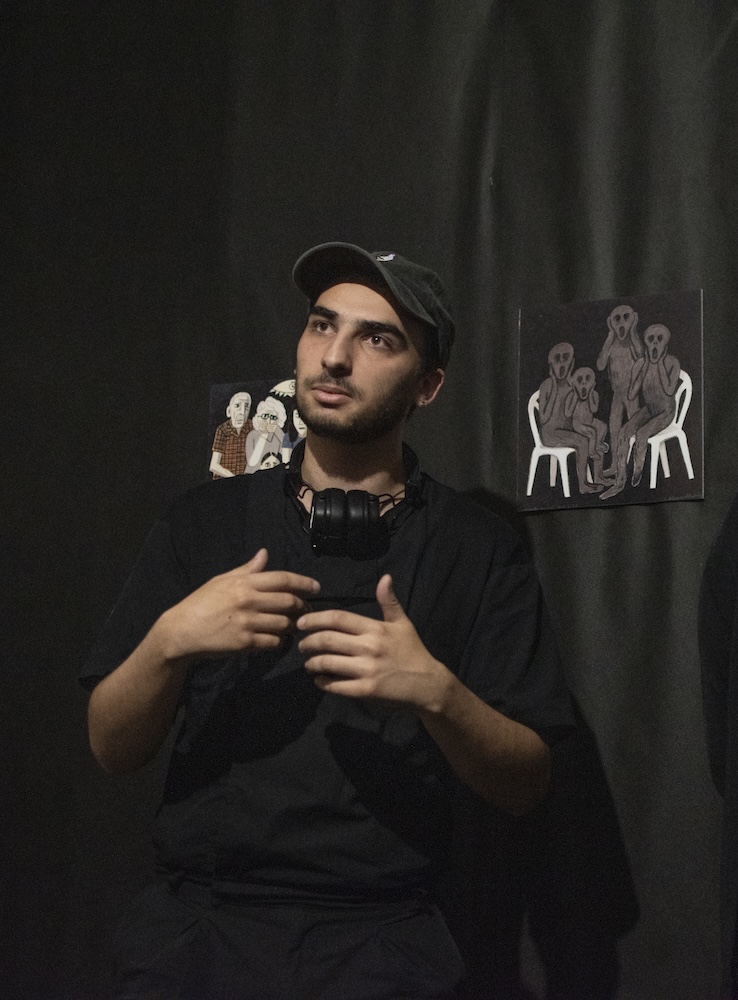
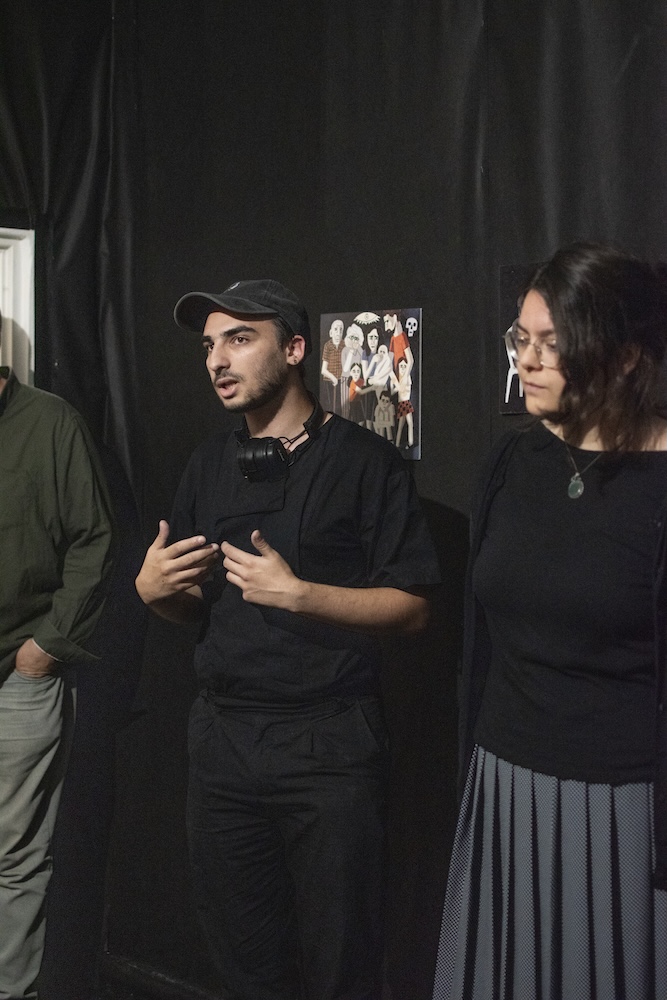
Most of the drawings are installed at their original dimensions against a black wall. The darkened environment visually suppresses the gallery’s architecture and concentrates attention on the individual images, their colour, and the intensity of the situations they depict.
One of the key works relating to the massacre at the Nova music festival constitutes an exception. It leaves behind the original scale of the drawing and occupies an entire gallery wall. The viewer encounters it immediately upon entering. The image is no longer merely an object observed from a safe distance. It enters our physical space.
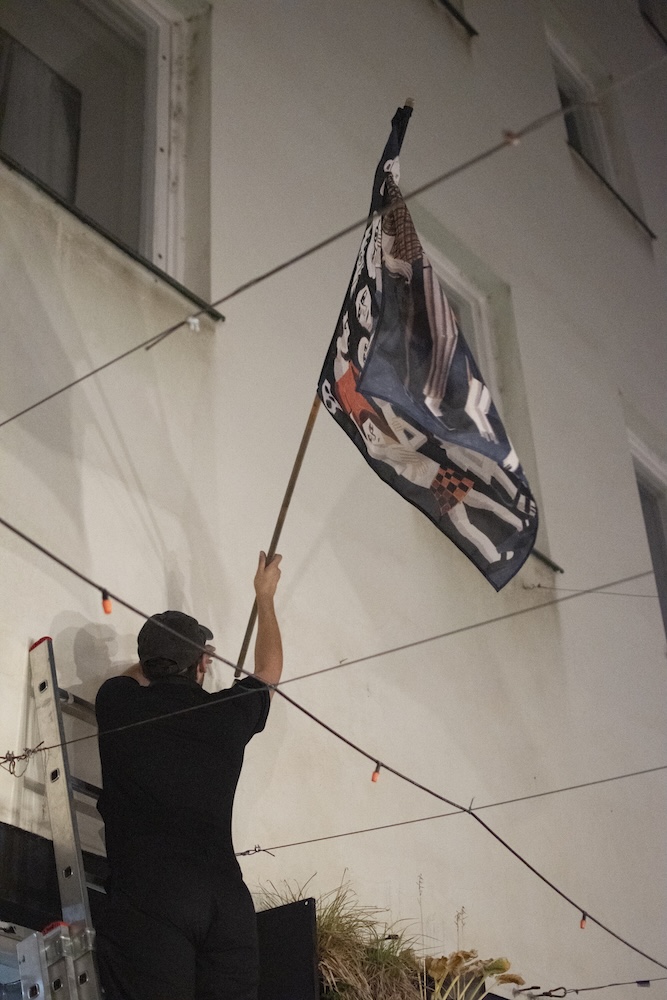
Another work crosses the boundary of the gallery and enters public space in the form of a flag. It depicts the shock and fear of people watching reports of the unfolding attack through screens. A private moment of helplessness is thereby transformed into a public image of memory.
The second room changes the way in which we speak about 7 October. We move from image to name.
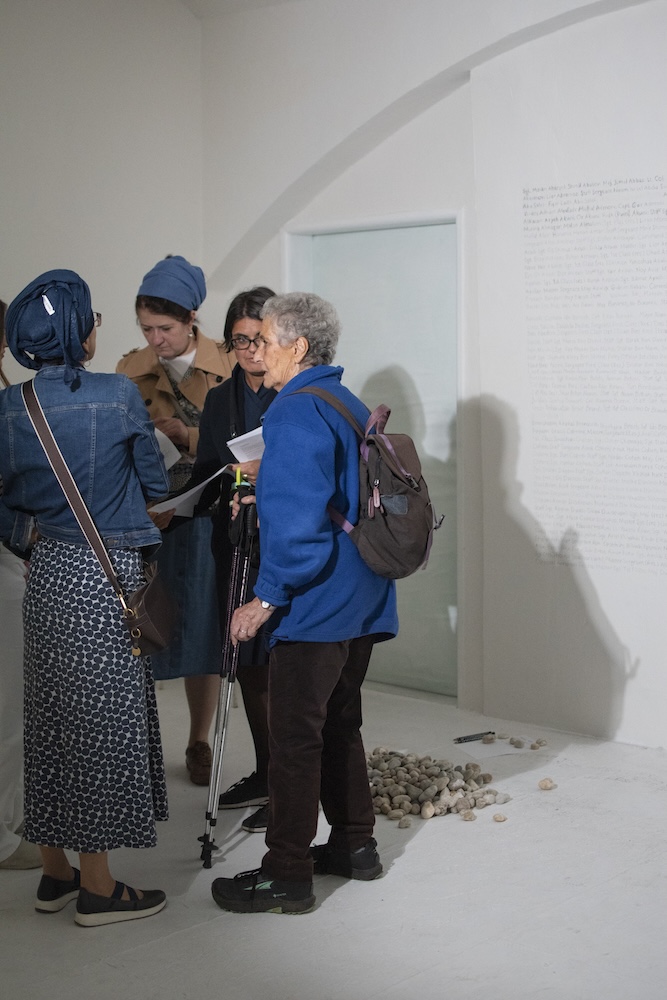
The names of the victims of the attack are handwritten on the walls. They are being written by young Jews and Israelis living in the Czech Republic—a generation raised with an awareness of the memory of the Shoah, while at the same time carrying its own contemporary experience.
The installation consciously enters into dialogue with one of the most significant sites of Jewish memory in Prague: the Memorial to the Victims of the Shoah in the Pinkas Synagogue. Its walls bear the handwritten names of more than 78,000 Jewish victims from the Czech lands (Jewish Museum in Prague). The memorial is founded on a fundamental principle: that every name represents an individual fate and the record of a particular human life.
The reference to the Pinkas Synagogue extends its approach to memory. Against the anonymity of the number, it places the name of the individual. The same principle is essential here. A name is not a statistic. It is the trace of a life.
Writing out the names is also a gesture of restoring individuality to people who may be reduced in public discourse to a number, a nationality, or a citizenship. Each written name reminds us that before the category “Israeli” or “victim of 7 October,” there was a particular person with relationships, a family, a past, and a future that was taken from them.
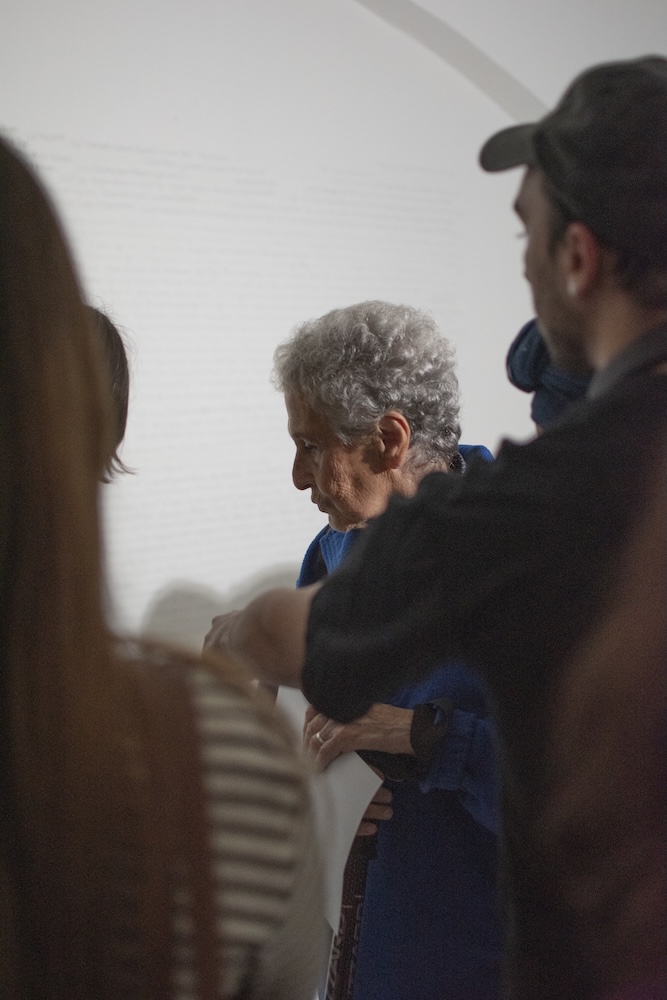
Visitors are invited to enter the emerging memorial themselves. The list of victims’ names has deliberately been left incomplete. A visitor may choose one of the remaining names and write it on the wall. They may then write a letter to the murdered person, to their family, or to someone they never knew personally.
The letter is then placed beneath a stone. The stone refers to the Jewish tradition of commemorating the dead, in which visitors leave a small stone on a grave as a physical trace of their presence and remembrance. The letter recalls the notes containing prayers and requests placed between the stones of the Western Wall or left at the grave of Rabbi Loew in Prague.
Over the course of the exhibition, the stones will gradually accumulate. Through these individual gestures, a shared and continually evolving memorial will emerge within the gallery a collective sculpture created by its visitors.
The exhibition itself has been created collectively by a community of young Jewish people together with young Israeli women and men living in the Czech Republic, who have been closely involved in its preparation, organisation, and installation. The fact that an exhibition devoted to memory, loss, and mourning has been created collectively by this particular community a generation of young people, many of whom belong to the fourth generation after the Shoah is an essential part of its meaning. Here, memory is not merely the subject of the exhibition; it is something transmitted, shared, and continually reshaped through collective work.
The two rooms form two autonomous yet interconnected parts. The first works with image and with Zoya Cherkassky’s testimony. The second works with names, individual memory, and a participatory act of mourning. In the first room, we are witnesses. In the second, we are invited to make a personal gesture.
The exhibition does not seek to prescribe a political interpretation of the war. It asks for something more elementary: that, for a moment, we reject the logic according to which human suffering must first pass a political test before we allow it to become an object of our empathy. The possibility of mourning a murdered human being should not be a political privilege. It is one of the most fundamental expressions of our humanity.
Tamara Moyzes, curator
Exhibition Information
Zoya Cherkassky: 7 October 2023
Opening: 7 October 2026, 7:00 pm
Exhibition: 8–27 October 2026
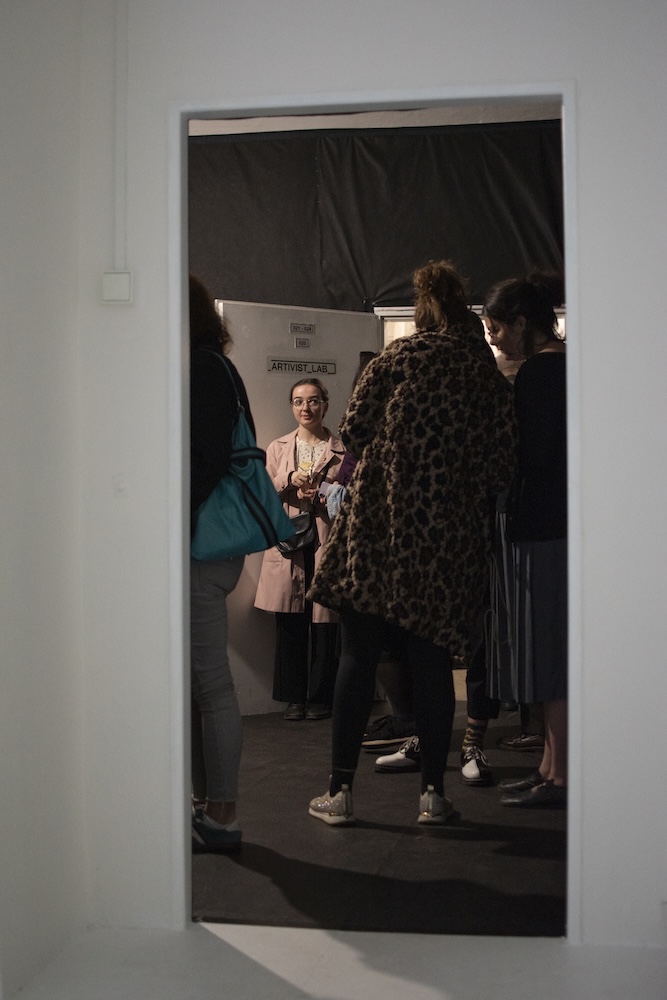
Venue: Artivist Lab, Kampus Hybernská, Hybernská 4, Prague 1
Curator: Tamara Moyzes
Co-curator: Tamir Yaffe
Opening remarks: Tamir Yaffe and Ella Veissid
Exhibition production: Tamir Yaffe
The exhibition has been made possible with the support of the Ministry of Culture of the Czech Republic, the State Cultural Fund of the Czech Republic, Prague City Hall, the Prague 1 Municipal District, and the Foundation for Holocaust Victims.
Zoya Cherkassky (b. 1976, Kyiv, Ukraine) is an Israeli artist of Ukrainian origin who lives and works on Long Island, New York. In 1991, at the age of fourteen, she emigrated with her family from the Soviet Union to Israel. She studied at the School of Visual Theater in Jerusalem and at the HaMidrasha School of Art at Beit Berl College. Since 2011, she has been a member of the New Barbizon artist group.
Throughout her practice, Cherkassky has explored migration, identity, antisemitism, racism, xenophobia, social inequality, war, and the everyday lives of different communities within Israeli society. Her own experience of migration from the Soviet Union to Israel has profoundly informed her interest in the lives of immigrants and people situated at the margins of mainstream society. Cherkassky combines traditions of figurative and realist painting with irony, social critique, and empathy towards the individual. Her work frequently resists unambiguous political categorisation.
She has critically addressed different forms of violence and social exclusion. Her work has examined the experiences of post-Soviet immigrants in Israel, African migrants, sex workers, antisemitism, and violence against Palestinians. In The History of Violence (2016) and After Pogrom (2023), she responded to violence against Palestinians. Following the Hamas attack on Israel on 7 October 2023, she created the series 7 October 2023, a body of drawings depicting murder, abduction, sexual violence, fear, and the trauma experienced by civilian victims. The series was presented in a solo exhibition at The Jewish Museum in New York in 2023–2024 and was subsequently acquired for the museum’s collection.
Cherkassky’s practice consistently resists simplistic divisions of society into clearly defined political camps. Her work begins with the observation of particular people and their individual experiences, while critically engaging with ideological rigidity, social stereotypes, and mechanisms of exclusion.
Cherkassky has exhibited at numerous major international institutions, including The Israel Museum in Jerusalem, Tel Aviv Museum of Art, The Jewish Museum in New York, the Neubauer Collegium for Culture and Society at the University of Chicago, Künstlerhaus Bethanien in Berlin, and other institutions across Europe, Israel, and the United States. In 2018, The Israel Museum presented her solo exhibition Pravda, which focused on the experience of post-Soviet immigration to Israel.
In 2025–2026, the Neubauer Collegium at the University of Chicago presented her solo exhibition The Global Political Crisis. This was followed in 2026 by American Cooking at Fort Gansevoort in New York, in which Cherkassky reflects on another experience of migration—this time her arrival in the United States and the question of what it means to become American.
Her works are held in the collections of The Israel Museum, Jerusalem; Tel Aviv Museum of Art; The Jewish Museum, New York; Jewish Museum Berlin; Jewish Museum Vienna; the Museum of Fine Arts, Houston; The New York Public Library; Columbia University; Johns Hopkins University; the University of Michigan; the University of Toronto; the Weisman Art Museum; and numerous other public and private collections.
In 2023, Cherkassky received an honorary doctorate from the Open University of Israel, followed in 2025 by an honorary doctorate in the arts from Ben-Gurion University of the Negev. Zoya Cherkassky is represented by Fort Gansevoort, New York.
Bibliography
ARENDT, Hannah. 1945. “Organized Guilt and Universal Responsibility.” Jewish Frontier, January 1945, pp. 19–23. Subsequently published in: ARENDT, Hannah. Essays in Understanding, 1930–1954: Formation, Exile, and Totalitarianism. Ed. Jerome Kohn. New York: Harcourt Brace & Company, 1994.
JASPERS, Karl. 1946. Die Schuldfrage. Heidelberg: Lambert Schneider. English edition: The Question of German Guilt. Trans. E. B. Ashton. New York: Dial Press, 1947.
LEVINAS, Emmanuel. 1961. Totalité et infini: Essai sur l’extériorité. The Hague: Martinus Nijhoff. English edition: Totality and Infinity: An Essay on Exteriority. Trans. Alphonso Lingis. Pittsburgh: Duquesne University Press, 1969.
ORWELL, George. 1945. “Notes on Nationalism.” Polemic: A Magazine of Philosophy, Psychology & Aesthetics, no. 1, October 1945.
SHULEVITZ, Judith. 2024. “The Israeli Artist Who Offends Everyone.” The Atlantic, 5 October 2024. Published in the print edition under the title “What Zoya Sees.”
THE JEWISH MUSEUM. 2023–2024. Zoya Cherkassky: 7 October 2023. New York, 15 December 2023–18 March 2024.
WEIL, Simone. 1940–1941. “L’Iliade ou le poème de la force.” Les Cahiers du Sud, nos. 230–231, December 1940–January 1941. Published under the pseudonym Émile Novis. English translation by Mary McCarthy: “The Iliad, or the Poem of Force.” Politics, November 1945.
JEWISH MUSEUM IN PRAGUE. Memorial to the Victims of the Shoah from the Czech Lands, Pinkas Synagogue, Prague. The memorial was created by Václav Boštík and Jiří John; its walls bear more than 78,000 handwritten names of Jewish victims of the Shoah from the Czech lands.